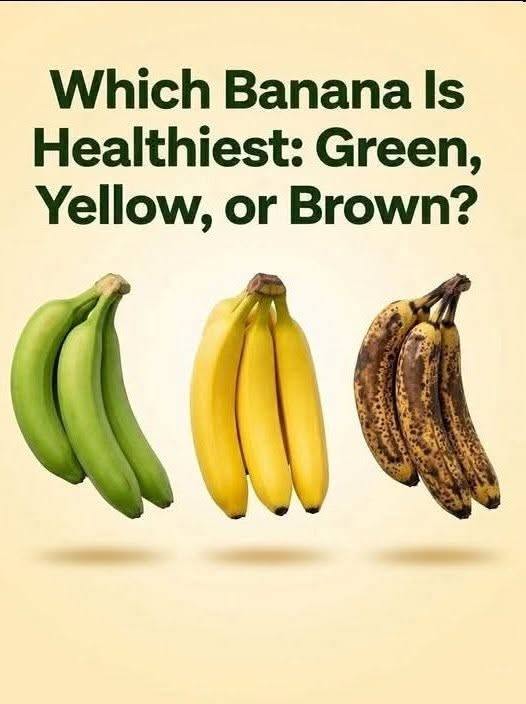
The main difference between green, yellow, and brown bananas is their ripeness, which changes their taste, texture, sugar content, and how your body digests them.
🍌 Green bananas (unripe)
- Taste: Mild, slightly bitter, less sweet
- Texture: Firm and starchy
- Sugar: Lower natural sugar because starch has not fully converted yet
- Digestion: Higher in resistant starch, which acts like fiber and may support gut health
- Best for: Cooking, smoothies, or people who prefer a less sweet banana
🍌 Yellow bananas (ripe)
- Taste: Sweet and creamy
- Texture: Softer and easier to chew
- Sugar: More natural sugars as starch breaks down
- Digestion: Generally easier to digest than green bananas
- Best for: Eating as a snack, cereal, or baking
🍌 Brown-spotted bananas (very ripe)
- Taste: Very sweet
- Texture: Soft and sometimes mushy
- Sugar: Highest because more starch has converted into sugars
- Digestion: Often easiest to digest, though they may raise blood sugar more quickly than greener bananas
- Best for: Banana bread, pancakes, smoothies, and baking
Which one is healthiest?
It depends on your needs:
- For more fiber-like resistant starch: choose greener bananas.
- For quick energy: choose yellow or ripe bananas.
- For baking and sweetness without added sugar: choose brown-spotted bananas.
People with diabetes or blood sugar concerns may want to pay attention to portion size and how ripe the banana is, since riper bananas generally have a faster effect on blood glucose.
