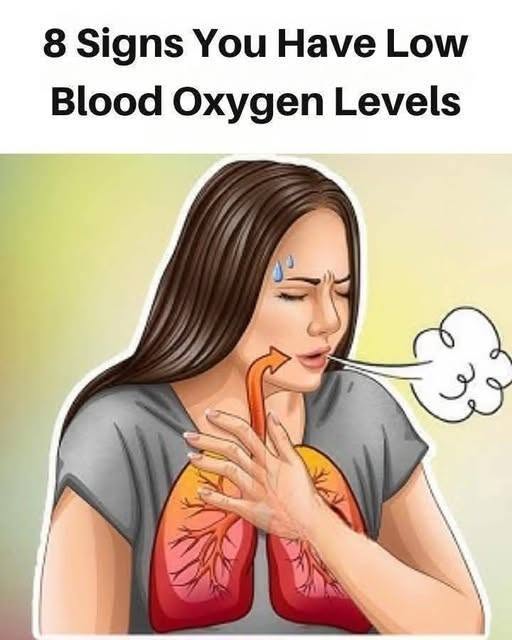
Warning Signs You May Not Have Enough Oxygen in Your Blood
Low blood oxygen levels (hypoxemia) can happen when the body is not getting enough oxygen through the lungs or bloodstream. Symptoms can vary depending on how low the oxygen level is and how quickly it changes.
Common warning signs
1. Shortness of breath
Feeling like you cannot get enough air, especially during normal activities or at rest, can be a sign that your body is struggling to get enough oxygen.
2. Fast breathing or rapid heartbeat
When oxygen is low, the body may try to compensate by breathing faster or making the heart work harder.
3. Bluish lips, fingertips, or skin
A blue or gray tint (called cyanosis) can be a sign of reduced oxygen levels and should be taken seriously.
4. Unusual tiredness or weakness
Low oxygen can make everyday activities feel exhausting because cells are not receiving enough oxygen to function efficiently.
5. Confusion, trouble concentrating, or dizziness
The brain is highly dependent on oxygen. Reduced oxygen levels may affect alertness, thinking, and balance.
6. Chest discomfort
Chest pain or pressure—especially with breathing difficulty—can be a medical emergency.
7. Headache or restlessness
Some people with low oxygen may experience headaches, anxiety, or a feeling of unease.
8. Difficulty exercising compared with usual
A noticeable drop in stamina or becoming breathless with activities that were previously easy may need evaluation.
Possible causes
Low blood oxygen can be related to conditions such as:
- Lung infections (including pneumonia)
- Asthma or COPD flare-ups
- Sleep apnea
- Heart problems
- Blood clots in the lungs
- Other conditions affecting breathing or circulation
When to seek urgent help
Get urgent medical attention if there is:
- Severe trouble breathing
- Blue lips or face
- New confusion or inability to stay awake
- Severe chest pain
- Sudden worsening of symptoms
A pulse oximeter can estimate blood oxygen saturation (SpO₂), but readings should be interpreted along with symptoms and medical history. If you have ongoing breathing problems or repeated low readings, a healthcare professional can help determine the cause.
