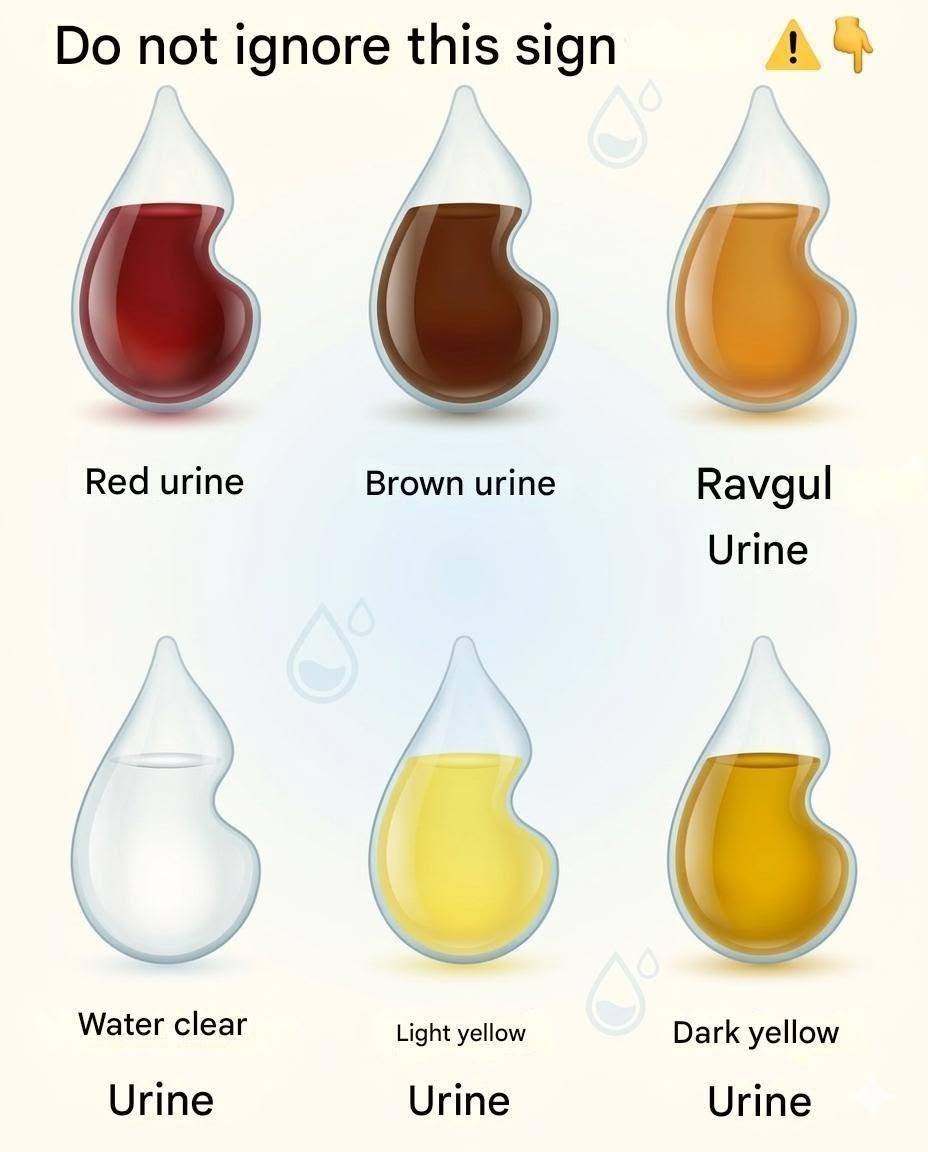
The color of your urine can give clues about hydration, diet, medications, and sometimes health conditions. A single change in color is often harmless, but ongoing or unusual changes may deserve attention.
What different urine colors may mean
🟡 Pale yellow (usually normal)
- Often indicates good hydration.
- This is the typical color of well-hydrated urine.
🟨 Dark yellow or amber
- Commonly suggests you may need more fluids.
- It can happen after sweating, illness, or not drinking enough water.
⚪ Very clear urine
- May mean you are drinking a lot of water.
- Constantly clear urine can sometimes indicate excessive fluid intake.
🟠 Orange urine
- Can be caused by dehydration, certain foods, or medications.
- If it occurs with yellowing of the skin or eyes, it may need medical evaluation.
🔴 Pink or red urine
- Foods like beets can sometimes cause this.
- It can also indicate blood in the urine, which should be checked if there is no obvious explanation.
🟤 Brown or tea-colored urine
- May occur with severe dehydration.
- It can also be linked to certain medications, liver problems, or muscle breakdown in some cases.
🟢 Green or blue urine
- Sometimes caused by food coloring, dyes, or medications.
- Rarely, it may be related to certain medical conditions.
☁️ Cloudy urine
- Can occur with dehydration.
- It may also be associated with urinary tract infections, especially if there is burning, pain, urgency, or a strong odor.
When to contact a healthcare professional
Seek medical advice if you notice:
- Blood in your urine
- Persistent dark or unusual urine color
- Pain, burning, fever, or difficulty urinating
- Sudden changes without an obvious cause
- Yellowing of the skin or eyes
A helpful rule: pale straw-colored urine is often a sign of good hydration, while darker urine often means your body may need more fluids. But urine color alone cannot diagnose a disease—symptoms and medical tests provide the full picture.
