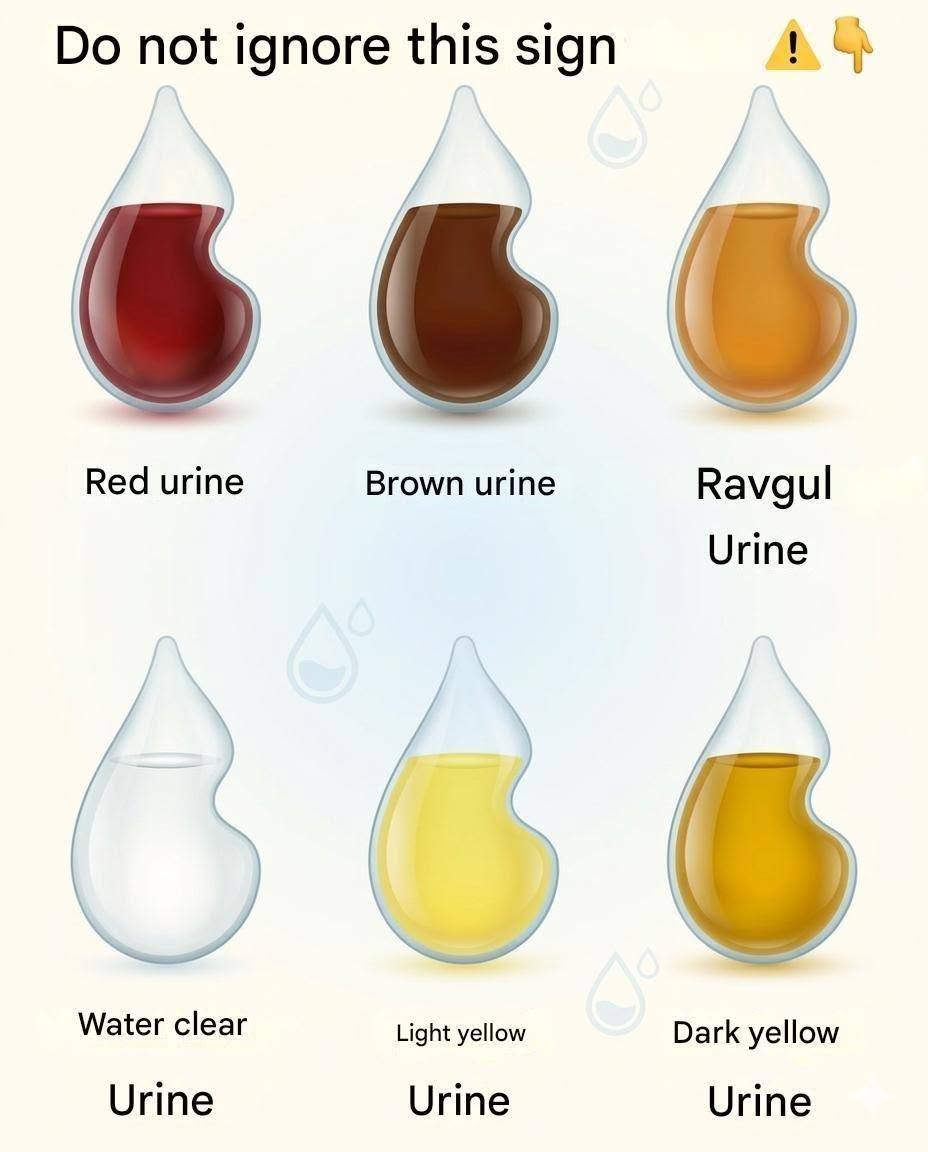
Urine color can give useful clues about hydration and sometimes overall health—but it’s not a diagnosis tool on its own. It’s more like an early “signal” than a medical test.
Here’s a simple guide:
💧 Clear or very light yellow
Usually means:
- You’re well hydrated
- Or possibly overhydrated (drinking a lot of water)
Generally normal, but constantly totally clear urine can mean you’re drinking more water than your body needs.
🌼 Pale straw / light yellow (ideal)
- This is the healthy target range
- Good hydration, normal kidney function
🍯 Dark yellow / amber
- Most common sign of dehydration
- You may need more fluids
If it improves after drinking water, it’s usually not a concern.
🟠 Orange
Can be caused by:
- Dehydration
- Certain vitamins (especially B-complex)
- Some medications
Rarely, it can be linked to liver or bile issues if persistent.
🩷 Pink or red
Possible causes:
- Food (beets, berries)
- Blood in urine (can be from infection, stones, or other urinary tract issues)
If it’s not food-related, it should be checked.
🟤 Brown or cola-colored
Can be caused by:
- Severe dehydration
- Muscle breakdown
- Liver issues (bilirubin in urine)
This is a “don’t ignore it” color if it persists.
🟢 Blue or green (rare)
- Usually from medications, dyes, or rare infections
Important context
Changes are often harmless and temporary, but persistent abnormal colors can sometimes relate to conditions affecting the urinary system or kidneys, including Chronic Kidney Disease.
When to actually worry
Seek medical advice if:
- Red/pink urine persists without food explanation
- Brown urine lasts more than a day
- You also have pain, fever, or burning while urinating
- Foamy urine appears consistently (can suggest protein loss)
Bottom line
Most urine color changes are about hydration or diet—not disease. The “safe zone” is light yellow, like straw.
If you want, I can also explain what urine smell or foaminess can indicate—that’s another commonly misunderstood signal.
