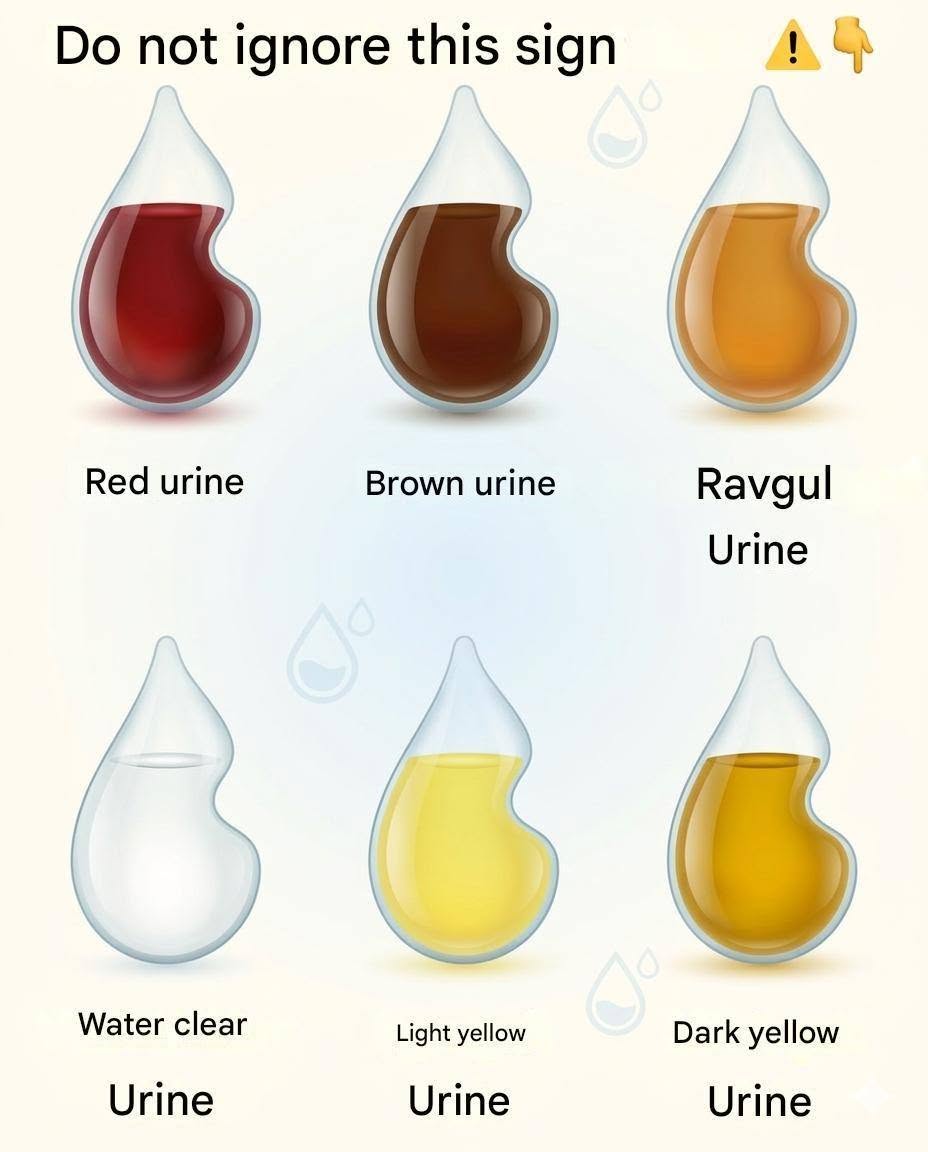
The color of your urine can give clues about your hydration level and some aspects of your health, although it is not a complete health test.
- Pale yellow to light straw color: Usually a sign of good hydration.
- Dark yellow or amber: Often means you may need more fluids.
- Completely clear urine: Can mean you are drinking more water than you need (especially if it happens constantly).
- Orange urine: May come from dehydration, certain foods, or medications; persistent orange urine can sometimes be related to liver or bile problems.
- Pink or red urine: Could be from foods like beetroot, but it may also indicate blood in the urine and should be checked if unexplained.
- Brown or cola-colored urine: Can be linked to severe dehydration, certain medications, muscle breakdown, or liver-related issues and may need medical attention.
- Blue or green urine: Rare; can be caused by some dyes, medications, or infections.
- Cloudy or milky urine: May occur with dehydration, crystals, infection, or other urinary issues—especially if accompanied by pain, fever, or a strong smell.
Seek medical advice if you notice blood in urine, persistent unusual colors, pain/burning, fever, back pain, or changes that don’t go away after correcting hydration.
A quick everyday guide: light yellow is generally the goal; darker yellow usually means “drink more.”
