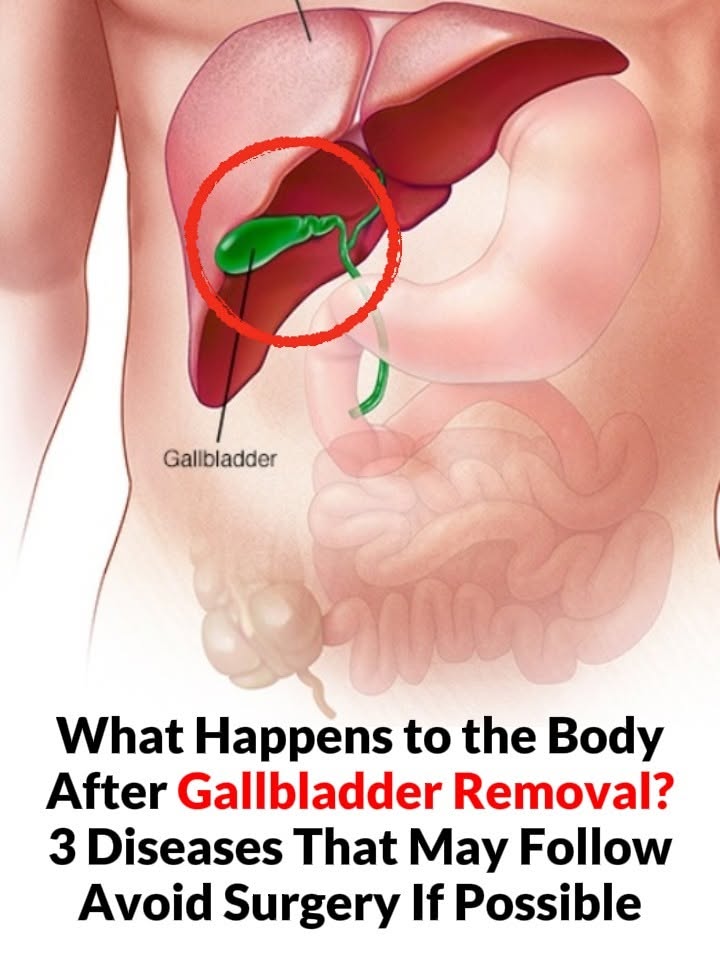
Gallbladder removal (cholecystectomy) is a common operation, and for many people it safely relieves problems caused by gallstones or gallbladder inflammation. The body can function without a gallbladder because the liver continues making bile; the difference is that bile flows directly into the small intestine instead of being stored and released in larger amounts after meals.
The claim that you should “avoid surgery if possible” needs some context: gallbladder removal is not always avoidable or unnecessary. When there are repeated painful attacks, infection, blockage, or certain complications, surgery may prevent more serious problems.
Possible changes after gallbladder removal
1. Digestive changes
Some people notice:
- Loose stools or diarrhea, especially after fatty meals
- Bloating or gas
- Urgency to use the bathroom
- Difficulty digesting very rich foods
These symptoms often improve over time as the digestive system adapts.
2. Bile-related diarrhea (post-cholecystectomy diarrhea)
Without a gallbladder, bile enters the intestine continuously. In some people, excess bile reaching the colon can irritate it and cause chronic diarrhea. This can often be managed with dietary changes and, when needed, medications prescribed by a clinician.
3. Possible increased risk of certain digestive issues
Research has explored associations between gallbladder removal and conditions such as:
- Bile reflux gastritis (bile flowing back into the stomach in some people)
- Changes in gut bacteria
- Some increased risks of certain digestive conditions in specific populations
These risks are not guaranteed, and they do not mean most people will develop serious disease after surgery.
Ways to support digestion after removal
- Eat smaller meals at first
- Reduce very high-fat meals if they trigger symptoms
- Increase fiber gradually
- Maintain a healthy weight and regular activity
- Follow your surgeon’s recovery advice
When surgery is usually considered
Doctors commonly recommend gallbladder removal for:
- Recurrent gallstone attacks
- Gallbladder infection (cholecystitis)
- Blocked bile ducts
- Pancreatitis caused by gallstones
- Certain gallbladder growths or cancer risks
If you are considering surgery, the decision depends on why the gallbladder is being removed, your symptoms, and your overall health—not just the fact that the gallbladder is removable.
If you’d like, I can also explain the 3 most common long-term problems people report after gallbladder removal and how often they actually occur.
