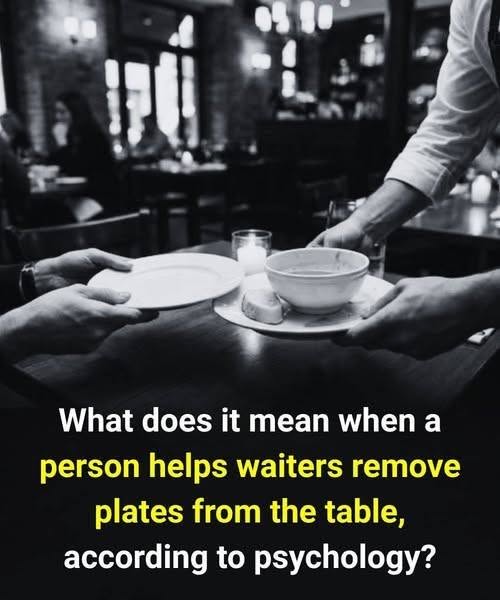
When someone helps a waiter clear the table, psychology does not allow us to determine their personality with certainty from that one action alone. However, it may reflect several possible traits or social tendencies:
1. Empathy and consideration
Helping with a small task can show awareness of another person’s workload and a willingness to make things easier for them.
2. Prosocial behavior
Psychologists use this term for actions intended to benefit others. Small acts of helpfulness can be associated with kindness, cooperation, and social responsibility.
3. Humility and respect
Some people help because they see service workers as equals and want to show appreciation rather than viewing the work as “someone else’s problem.”
4. Social awareness
A person who notices when someone is busy may be more attentive to their surroundings and other people’s needs.
5. Personal values and habits
The behavior may come from upbringing, culture, family habits, or a general preference for being helpful.
That said, there can be many reasons someone clears a table: they may simply be polite, they may have worked in hospitality before, they may feel uncomfortable leaving a mess, or they may just be following a personal habit. A single gesture is a positive sign, but it is not a complete measure of someone’s character.
