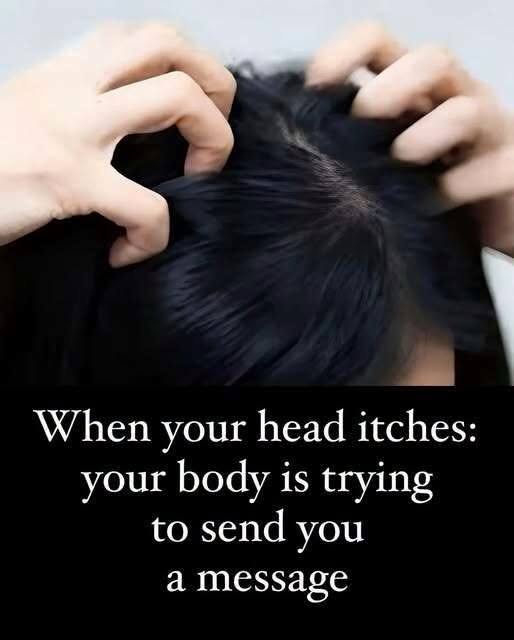
When Your Head Itches: What Your Body May Be Trying to Tell You
An itchy scalp is common, and it can happen for many reasons. While it is not always a sign of a serious problem, persistent itching can be your body’s way of signaling that something needs attention.
1. Dry scalp
A lack of moisture can make the scalp feel tight, flaky, and itchy. This is more common in dry weather or when using harsh shampoos.
What may help:
- Use a gentle, moisturizing shampoo
- Avoid very hot water
- Limit over-washing
2. Dandruff or seborrheic dermatitis
An itchy scalp with white or yellowish flakes may be caused by dandruff or irritation related to natural scalp oils and yeast growth.
Possible signs:
- Flaking
- Redness
- Greasy patches
- Scalp sensitivity
3. Product irritation or allergy
Hair dyes, styling products, fragrances, and some shampoos can trigger irritation or allergic reactions.
Clues include:
- Itching after trying a new product
- Burning or redness
- Rash along the hairline or neck
4. Head lice
Lice can cause intense itching, especially around the:
- Back of the neck
- Behind the ears
Small eggs (nits) attached to hair shafts may also be visible.
5. Skin conditions
Conditions such as psoriasis, eczema, or fungal infections can affect the scalp and cause itching, scaling, or patches.
6. Stress and other factors
Stress can sometimes worsen itching or trigger scratching habits, and some medications or health conditions may also contribute.
When to get medical advice
Consider seeing a healthcare professional or dermatologist if:
- Itching is severe or lasts more than a few weeks
- There are sores, bleeding, pus, or crusting
- You notice significant hair loss
- The scalp becomes very red, painful, or swollen
- Over-the-counter treatments do not help
An itchy scalp is usually treatable once the underlying cause is identified—it is a symptom, not a diagnosis by itself.
