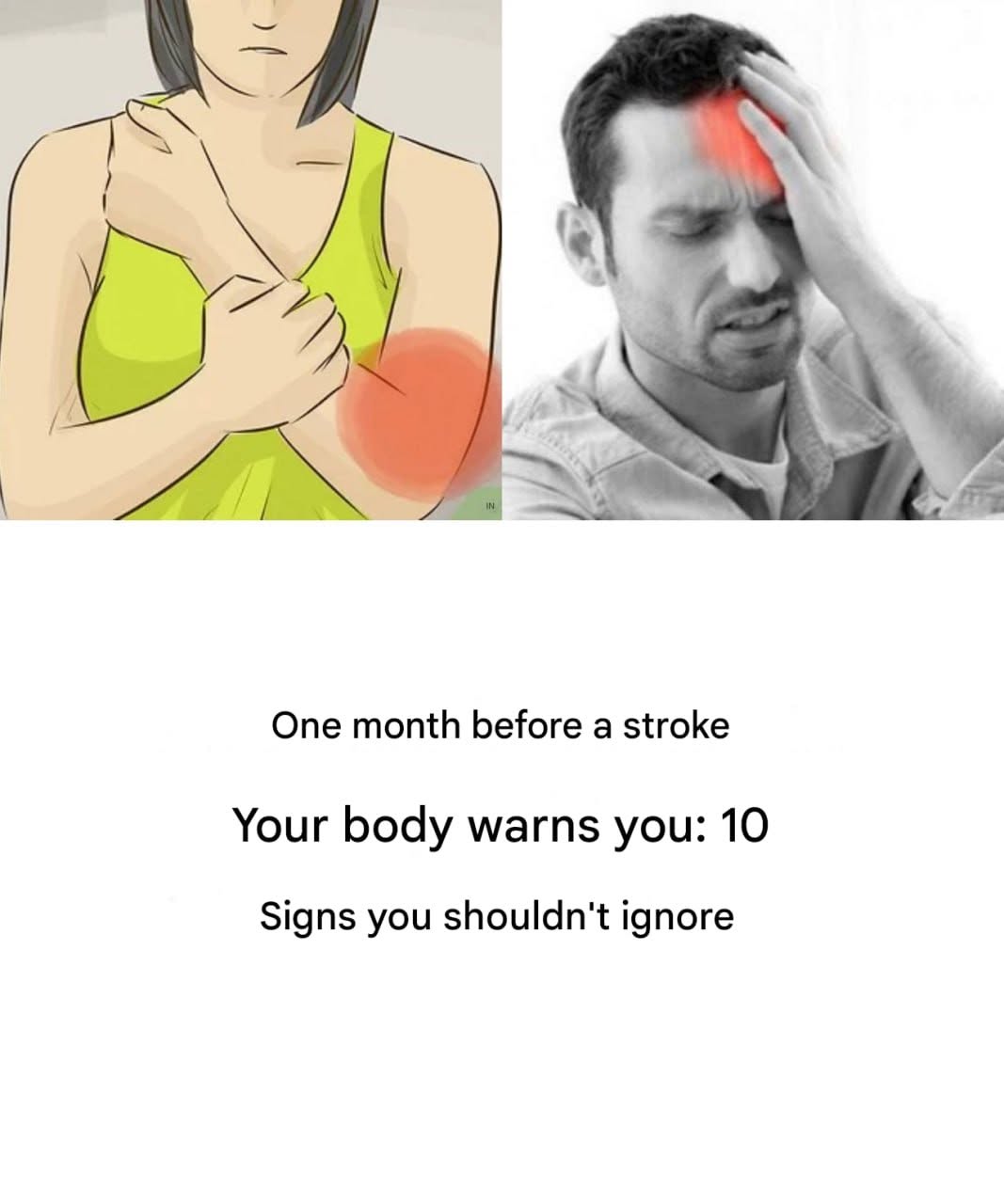
Can Your Body Warn You One Month Before a Stroke? 10 Signs You Shouldn’t Ignore
The idea that your body gives a guaranteed one-month warning before a stroke is misleading. Many strokes happen suddenly, and there is no reliable countdown period. However, some people experience warning signs called transient ischemic attacks (TIAs) or other symptoms that may signal increased stroke risk and require medical attention.
A TIA is sometimes called a “mini-stroke.” Symptoms may last only minutes or hours, but it can be a warning that a more serious stroke could follow.
10 Possible Warning Signs You Should Never Ignore
1. Sudden weakness or numbness
Especially on one side of the body:
- Face
- Arm
- Leg
2. Facial drooping
One side of the face may feel weak or appear uneven when smiling.
3. Trouble speaking or understanding speech
Warning signs include:
- Slurred speech
- Difficulty finding words
- Confusion
4. Sudden vision problems
These may include:
- Loss of vision in one or both eyes
- Double vision
- Blurred vision
5. Sudden severe headache
A sudden, intense headache—especially unlike previous headaches—can be a sign of a serious problem.
6. Dizziness or loss of balance
Sudden:
- Trouble walking
- Loss of coordination
- Unsteadiness
can be a stroke warning sign.
7. Difficulty swallowing
New swallowing problems can occur with certain types of strokes.
8. Sudden confusion
A person may become disoriented or have trouble understanding what is happening.
9. Brief episodes of symptoms that disappear
Symptoms that go away quickly can still be serious. A TIA should be evaluated because it may precede a stroke.
10. Unusual weakness or fatigue with other symptoms
Fatigue alone is usually not a stroke warning sign, but sudden unexplained weakness combined with other neurological symptoms needs attention.
Remember FAST
A quick way to recognize stroke symptoms:
F — Face: Is one side of the face drooping?
A — Arms: Can both arms be raised normally?
S — Speech: Is speech strange or unclear?
T — Time: Call emergency services immediately if these signs appear.
Reduce Your Stroke Risk
Important prevention steps include:
- Controlling blood pressure
- Managing cholesterol and diabetes
- Avoiding smoking
- Staying physically active
- Eating a balanced diet
- Taking prescribed medications as directed
The Bottom Line
There is no dependable “one month before a stroke” warning list, but sudden neurological symptoms—especially those affecting the face, arm, speech, vision, or balance—should be treated as an emergency. Fast medical care can reduce the risk of serious disability and complications.
