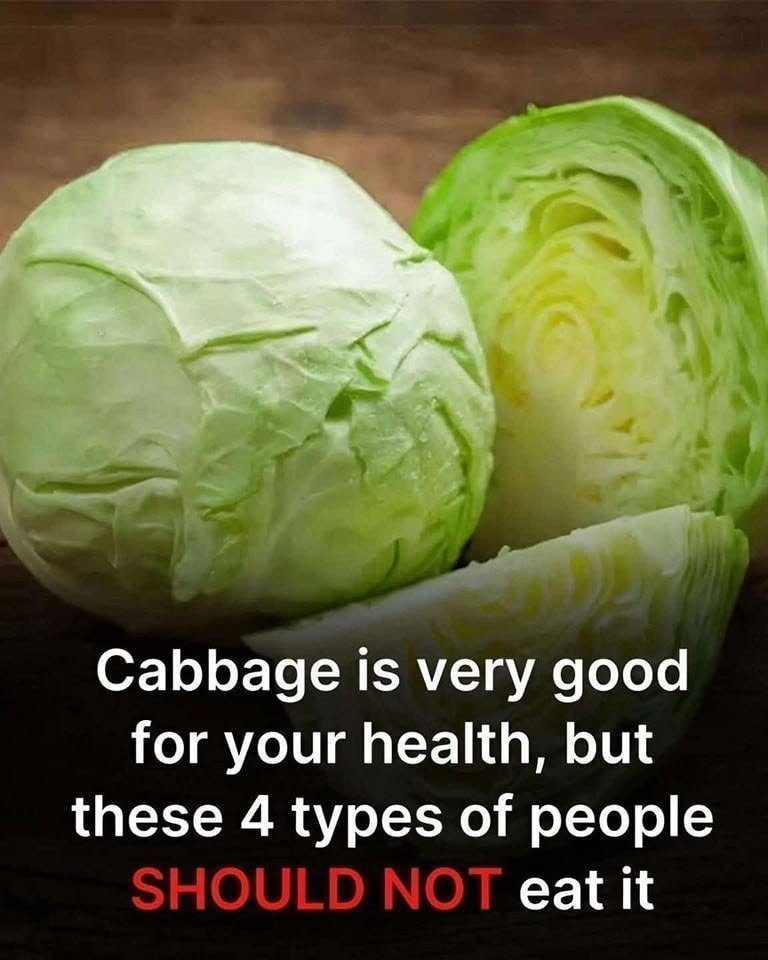
Cabbage is a nutritious vegetable for most people, but there are situations where it may be better to limit or avoid it, especially in large amounts.
1. People taking blood-thinning medication (such as warfarin)
Cabbage is high in vitamin K, which helps blood clot. A sudden increase or decrease in vitamin K intake can affect how warfarin works. If you take warfarin, it’s usually best to keep your vitamin K intake consistent rather than avoiding cabbage completely. Talk with your healthcare provider before making major dietary changes.
2. People with certain thyroid conditions
Raw cabbage contains compounds called goitrogens, which can interfere with iodine use by the thyroid. This is generally only a concern if:
- You have an iodine deficiency or untreated hypothyroidism.
- You eat large amounts of raw cruciferous vegetables regularly.
Cooking cabbage reduces these compounds, and moderate amounts are not a problem for most people.
3. People with digestive conditions that worsen with high-FODMAP foods
Cabbage can cause gas, bloating, or abdominal discomfort in some people, especially those with:
- Irritable bowel syndrome (IBS)
- Sensitivity to high-FODMAP foods
If cabbage triggers symptoms, try smaller portions or cooked cabbage instead of raw.
4. People with cabbage allergy (rare)
Although uncommon, some people are allergic to cabbage or related vegetables. Symptoms can include:
- Itching or swelling of the mouth
- Hives
- Trouble breathing (seek emergency medical care)
Bottom line
For most people, cabbage is a healthy food rich in fiber, vitamins C and K, and antioxidants. Unless you have one of the situations above or another medical reason to avoid it, there’s no need to eliminate it from your diet.
If you’re considering avoiding cabbage because of a specific health condition or medication, it’s a good idea to discuss it with your healthcare provider or a registered dietitian.
