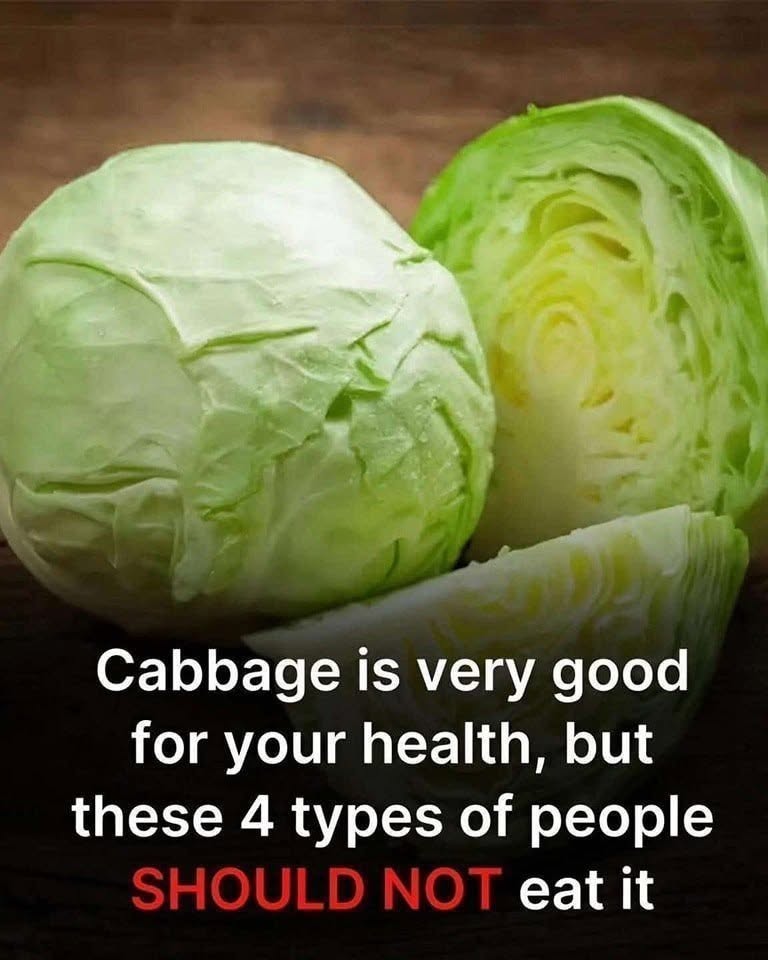
4 Types of People Who May Need to Limit or Avoid Cabbage
Cabbage is a nutritious vegetable rich in fiber, vitamins, and antioxidants, and most people can eat it safely. However, certain people may need to limit their intake or be cautious because cabbage can worsen specific conditions.
1. People with thyroid problems (especially hypothyroidism)
Cabbage belongs to the cruciferous vegetable family. It contains compounds called goitrogens, which can interfere with thyroid hormone production in some situations, especially when eaten in very large amounts and when iodine intake is low.
Tip: Cooking cabbage reduces goitrogen activity, and moderate portions are usually not a concern for most people with thyroid disease.
2. People prone to gas, bloating, or digestive discomfort
Cabbage contains fiber and certain carbohydrates that can be fermented by gut bacteria, which may cause:
- Gas
- Bloating
- Abdominal discomfort
- Cramping
People with sensitive digestion or conditions such as irritable bowel syndrome (IBS) may find that smaller portions or cooked cabbage are easier to tolerate.
3. People taking blood-thinning medication
Cabbage contains vitamin K, which plays a role in blood clotting. People taking vitamin K–sensitive anticoagulants (such as warfarin) should avoid sudden large changes in their cabbage or leafy-green intake without discussing it with their healthcare provider.
Tip: Consistency is usually more important than completely avoiding vitamin K foods.
4. People with certain food sensitivities or allergies
Although uncommon, some people may react poorly to cabbage and experience symptoms such as:
- Itching
- Swelling
- Stomach upset
- Allergic reactions
Anyone with a suspected food allergy should seek medical advice.
Bottom line
For most people, cabbage is a healthy food choice. If you have a thyroid condition, digestive issues, take blood-thinning medication, or notice symptoms after eating cabbage, it may be worth adjusting your intake or discussing it with a healthcare professional.
