9 Foot Symptoms You Should Never Ignore — What They Could Mean
Your feet can reveal important clues about your overall health. While many foot problems are minor, certain changes may signal conditions that need medical attention.
1. Persistent foot pain or swelling
Possible causes:
- Arthritis
- Tendon or ligament injuries
- Inflammation
- Circulation problems
Pain that doesn’t improve with rest, proper footwear, or basic care should be evaluated.
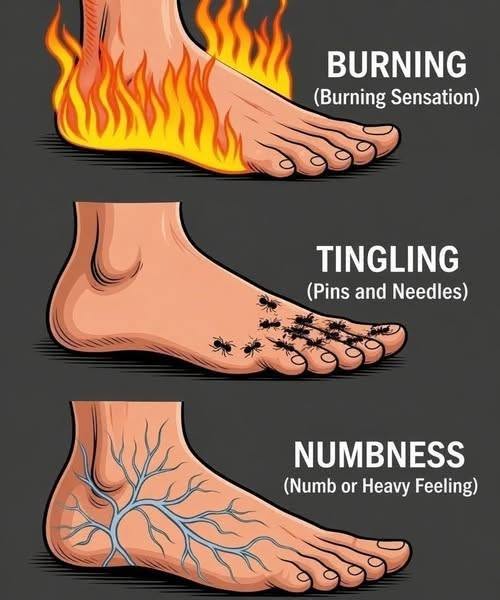
2. Numbness or tingling in the feet
Possible causes:
- Nerve damage (neuropathy)
- Diabetes-related nerve problems
- Vitamin deficiencies
- Nerve compression
Loss of feeling can increase the risk of unnoticed injuries, especially in people with diabetes.
3. Burning sensations in the feet
Possible causes:
- Peripheral neuropathy
- Nerve irritation
- Certain vitamin deficiencies
- Circulatory issues
A persistent burning feeling, especially at night, is worth discussing with a healthcare professional.
4. Sudden swelling in one foot
Possible causes:
- Injury
- Infection
- Blood clot (deep vein thrombosis)
Sudden swelling, especially with warmth, redness, or calf pain, needs prompt medical attention.
5. Slow-healing cuts or sores
Possible causes:
- Poor circulation
- Diabetes
- Infection risk
A foot wound that does not heal normally should be checked, particularly if there is drainage, increasing redness, or worsening pain.
6. Changes in toenails
Possible causes:
- Fungal infections
- Injury
- Psoriasis
- Sometimes circulation or nutritional issues
Watch for sudden changes in color, thickness, shape, or separation from the nail bed.
7. Cold feet that stay cold
Possible causes:
- Poor circulation
- Nerve problems
- Thyroid issues
- Other medical conditions
Occasionally cold feet are normal, but persistent coldness with color changes or pain may need evaluation.
8. Changes in foot color
Examples and possible causes:
- Redness and warmth: infection or inflammation
- Pale or bluish color: circulation problems
- Dark patches or unusual discoloration: may need examination
9. A new lump, deformity, or change in how you walk
Possible causes:
- Bunions
- Cysts
- Bone or joint problems
- Nerve or muscle issues
Changes in foot shape or walking patterns can affect balance and increase fall risk.
Seek medical care sooner if you notice:
- A foot wound that is not healing
- Severe or sudden pain
- Loss of sensation
- Signs of infection (spreading redness, warmth, pus, fever)
- A cold, pale, or blue foot
- Sudden swelling in one leg or foot
Regular foot checks, comfortable footwear, and attention to changes can help catch problems early.
