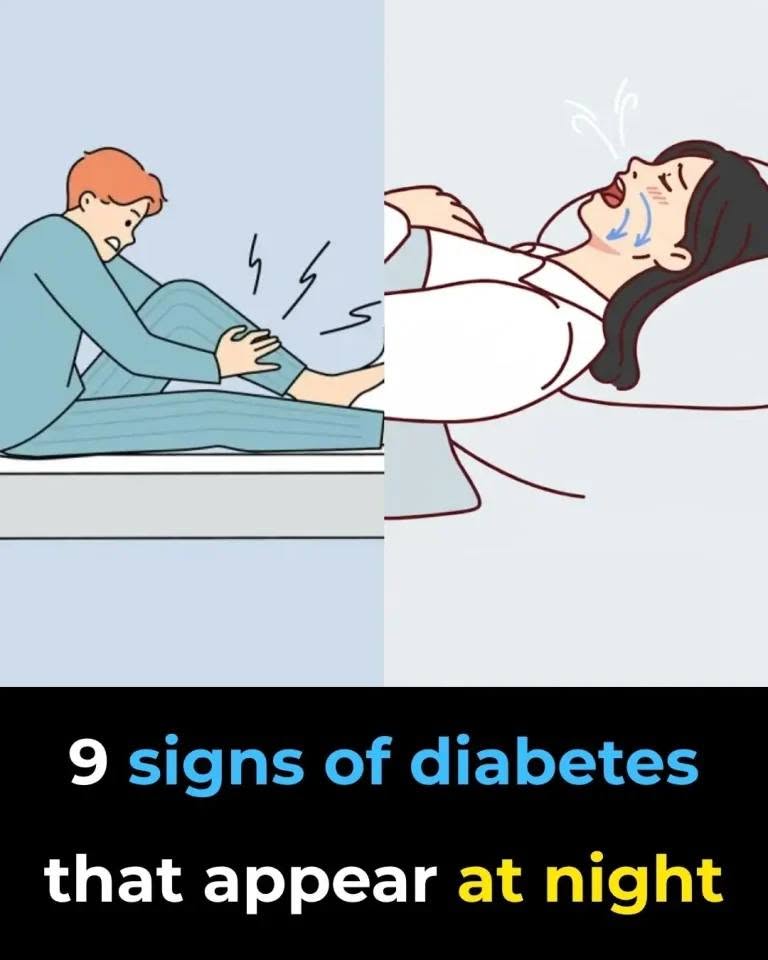
Diabetes mellitus can sometimes cause symptoms that are more noticeable at night. These signs are not proof of diabetes by themselves, but if they occur regularly—especially together—they may be worth discussing with a healthcare professional.
9 Signs of Diabetes That May Appear at Night
- Frequent nighttime urination
- High blood sugar can cause the kidneys to remove extra glucose through urine, increasing the need to wake up and urinate.
- Excessive thirst at night
- Fluid loss from frequent urination may lead to increased thirst, including waking up needing water.
- Night sweats
- Blood sugar dropping too low during sleep (especially in people taking certain diabetes medications) can trigger sweating, shakiness, or a racing heartbeat.
- Trouble sleeping
- Blood sugar fluctuations, frequent bathroom trips, thirst, or discomfort can interfere with sleep.
- Tingling, burning, or numbness in the feet
- Nerve damage related to diabetes (diabetic neuropathy) may cause symptoms that feel worse at night when there are fewer distractions.
- Unusual hunger before bed or during the night
- Blood sugar problems can sometimes cause feelings of intense hunger, even after eating.
- Slow-healing cuts or skin problems
- Diabetes can affect circulation and immune function, which may show up as recurring skin issues.
- Blurred vision
- Changes in blood sugar levels can temporarily affect the lenses of the eyes, sometimes noticed when waking or during nighttime activities.
- Restless legs or leg discomfort
- Some people with diabetes-related nerve changes experience uncomfortable sensations in the legs that disturb sleep.
When to get checked
Consider asking a healthcare professional about diabetes testing if you have persistent symptoms, especially with risk factors such as family history, being overweight, high blood pressure, or a history of abnormal blood sugar.
Common screening tests include:
- A1C test (average blood sugar over about 2–3 months)
- Fasting blood glucose test
- Oral glucose tolerance test
Early detection can help prevent or reduce complications.
