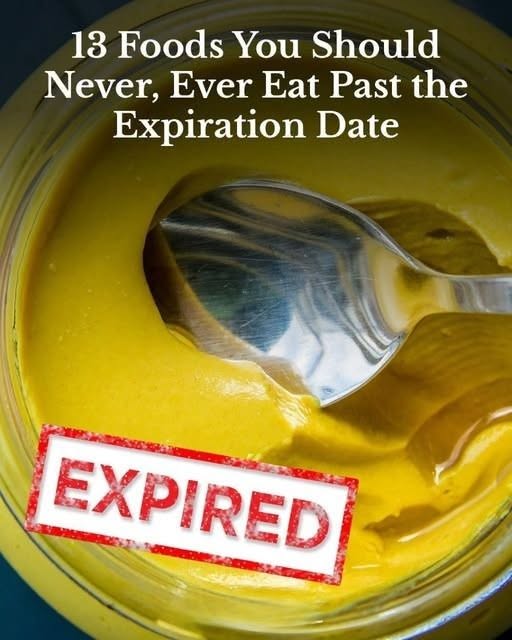
13 Foods You Should Be Careful Eating After Their Expiration Date
Expiration dates can be confusing. In many countries, “best before” dates often indicate quality, not necessarily safety. However, some foods become risky after their date—especially if they were stored improperly or show signs of spoilage.
Here are 13 foods that deserve extra caution:
- Fresh meat and poultry
Raw chicken, beef, pork, and other meats can develop harmful bacteria such as Salmonella and Escherichia coli. Don’t use them past their use-by date unless they were safely frozen. - Fresh fish and seafood
Seafood spoils quickly. If it smells strongly “fishy,” feels slimy, or is past its safety date, discard it. - Deli meats and cold cuts
Sliced meats can support bacterial growth, including Listeria monocytogenes, especially when stored for too long in the refrigerator. - Raw eggs
Eggs can carry bacteria and should be handled carefully. When in doubt after the date, avoid eating them raw or undercooked. - Soft cheeses
Soft cheeses such as brie, ricotta, and cream cheese have more moisture and can spoil faster than hard cheeses. - Milk and cream
Sour smell, curdling, or an unusual texture are signs to throw them away. - Cooked leftovers
Even refrigerated leftovers can become unsafe after several days because bacteria can multiply without obvious signs. - Prepared salads (especially with mayonnaise or dairy-based dressings)
Ready-to-eat salads have a shorter safe storage time. - Sprouted seeds and sprouts
Foods like bean sprouts can support bacterial growth and should be eaten fresh. - Opened sauces and condiments
Some sauces last a long time, but once opened they can develop mold or contamination. - Fresh juices (especially unpasteurized)
Unpasteurized juices may contain harmful microbes and spoil quickly. - Cooked rice and pasta
If left too long at room temperature or stored for many days, they can allow growth of bacteria such as Bacillus cereus. - Moldy foods
Mold on soft foods (bread, soft fruits, soft cheese, cooked foods) often means the contamination may have spread beyond what you see.
Signs food should be thrown away
- Bad smell
- Slimy texture
- Visible mold
- Bulging cans or leaking packaging
- Unusual color changes
- Food left out too long at room temperature
A useful rule: When in doubt, throw it out—especially for high-risk foods like meat, seafood, dairy, and cooked leftovers.
