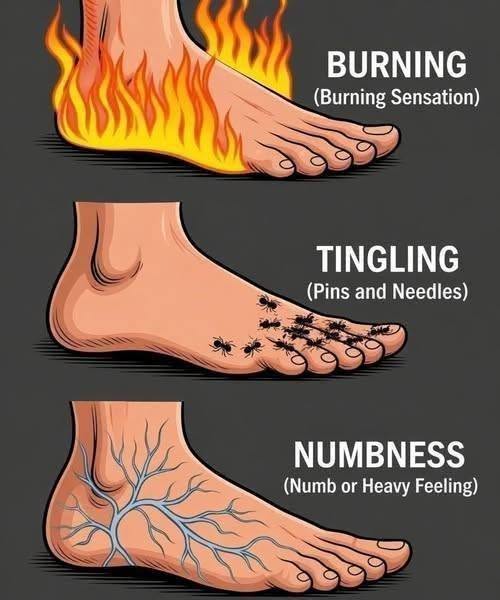
Many foot problems are minor, but some can be early warning signs of circulation problems, nerve damage, infection, or other medical conditions. Here are 9 foot symptoms you should not ignore and what they could mean:
- Persistent foot pain
- Could mean: Stress fracture, arthritis, tendon injury, or nerve problems.
- Seek medical attention if the pain lasts more than a few days, worsens, or prevents walking.
- Swelling in one or both feet
- Could mean: Injury, blood clot, infection, heart disease, kidney disease, or liver disease.
- Sudden swelling—especially in one leg with pain or redness—requires urgent evaluation.
- Numbness or tingling
- Could mean: Nerve damage, often from Diabetes, vitamin deficiencies, or a pinched nerve.
- Persistent numbness should be assessed by a healthcare professional.
- Foot wounds that won’t heal
- Could mean: Poor circulation, diabetes, or infection.
- This is especially concerning for people with diabetes because untreated wounds can become serious.
- Changes in skin color
- Blue or purple feet may indicate poor circulation.
- Redness and warmth may suggest infection or inflammation.
- Pale feet can indicate reduced blood flow.
- Cold feet (not due to weather)
- Could mean: Poor circulation, artery disease, or thyroid problems.
- If one foot is suddenly colder than the other, seek immediate medical care.
- Severe redness, warmth, and swelling
- Could mean: A serious infection such as Cellulitis or an inflamed joint.
- Fever along with these symptoms requires prompt medical attention.
- Sudden inability to move the foot or foot drop
- Could mean: Nerve injury, spinal problems, or, in some cases, a neurological emergency.
- Seek urgent medical evaluation.
- Black or dark discoloration of toes or skin
- Could mean: Tissue death (gangrene) from severe infection or loss of blood supply.
- This is a medical emergency and requires immediate treatment.
When to seek emergency care
Go to the emergency department or seek urgent medical help if you have:
- Sudden severe foot pain after an injury with inability to bear weight.
- A cold, blue, or numb foot.
- Rapidly spreading redness with fever.
- A deep wound with heavy bleeding.
- Black or gangrenous-looking tissue.
- Sudden one-sided leg swelling with pain and redness, which could indicate a blood clot.
If you have diabetes, regularly inspect your feet for cuts, blisters, or color changes, as early treatment can help prevent serious complications. If any of these symptoms are severe, rapidly worsening, or accompanied by fever or chest pain, seek medical care promptly.
