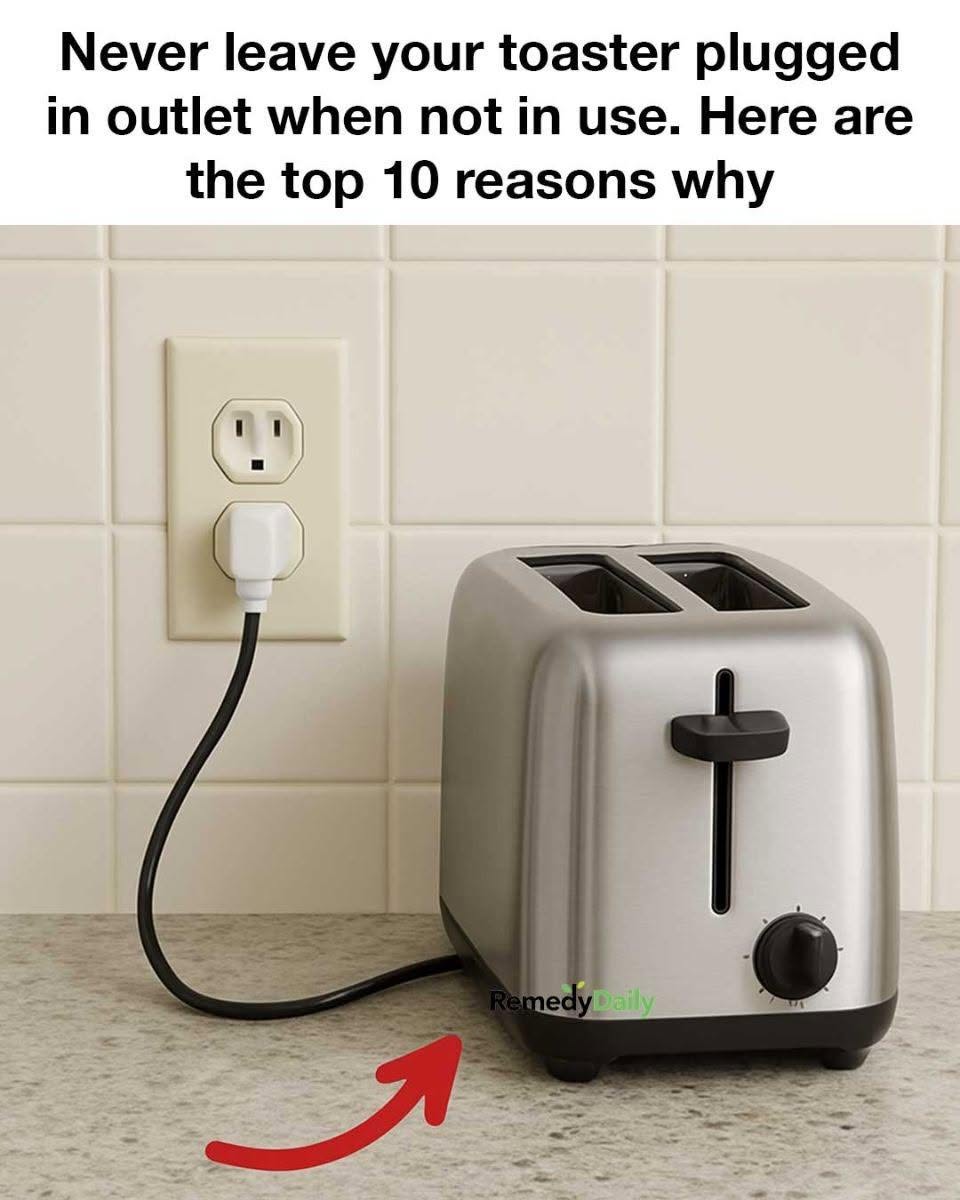
Never Leave Your Toaster Plugged Into the Outlet: 10 Reasons Why
A toaster is one of the most common kitchen appliances, but many people leave it plugged in all the time without thinking about it. While modern toasters are generally designed with safety features, keeping any heat-producing appliance connected to power when it is not being used can carry unnecessary risks.
Here are 10 reasons why unplugging your toaster after use may be a smart safety habit.
1. Reduces Fire Risk
Toasters use heating elements that reach very high temperatures. Although a toaster should not heat when it is idle, electrical faults, damaged components, or internal failures can create a fire risk.
Unplugging the appliance removes the possibility of it receiving power when unattended.
2. Prevents Accidental Activation
Some older or damaged toasters may have faulty switches or mechanical problems. A plugged-in toaster could potentially activate unexpectedly, especially if something presses the lever or controls.
3. Protects Against Electrical Surges
Power surges caused by storms, utility issues, or wiring problems can damage appliances. Disconnecting smaller appliances when not in use can help protect them from unexpected electrical spikes.
4. Helps Prevent Wear on Components
Even when not actively used, electrical components can experience gradual stress from remaining connected to power. Unplugging can reduce long-term exposure to electrical issues.
5. Protects Against Damaged Cords
A worn, cracked, or frayed power cord can become a hazard. Regularly unplugging your toaster gives you a chance to notice damage before it becomes dangerous.
6. Reduces Risk Around Children
Young children may pull on cords, press buttons, or experiment with appliances. Keeping a toaster unplugged when not needed adds an extra layer of safety.
7. Helps Avoid Problems From Kitchen Moisture
Kitchens often have steam, spills, and humidity. Moisture near electrical appliances can increase the chance of electrical problems, especially if the appliance is old or damaged.
8. Saves a Small Amount of Energy
Most modern toasters use little or no electricity when sitting idle, but unplugging appliances can eliminate even small standby power use in some devices.
9. Encourages Better Appliance Checks
Making unplugging part of your routine can remind you to:
- Clean crumbs regularly.
- Check for damage.
- Replace old or faulty appliances.
10. Provides Peace of Mind
Unplugging heat-producing appliances before leaving home or going to bed is a simple habit that can reduce worry about what is happening in the kitchen while you are away.
Additional Toaster Safety Tips
- Clean out crumbs regularly to reduce fire risk.
- Never insert metal objects into a plugged-in toaster.
- Keep the toaster away from water and wet surfaces.
- Do not use a toaster with a damaged cord or cracked casing.
- Avoid placing it near curtains, paper towels, or other flammable materials.
- Replace very old or malfunctioning appliances.
The Bottom Line
A toaster left plugged in does not automatically mean danger, especially if it is modern and in good condition. However, unplugging it after use is a simple safety habit that can reduce electrical risks, especially when leaving home or going to sleep.
