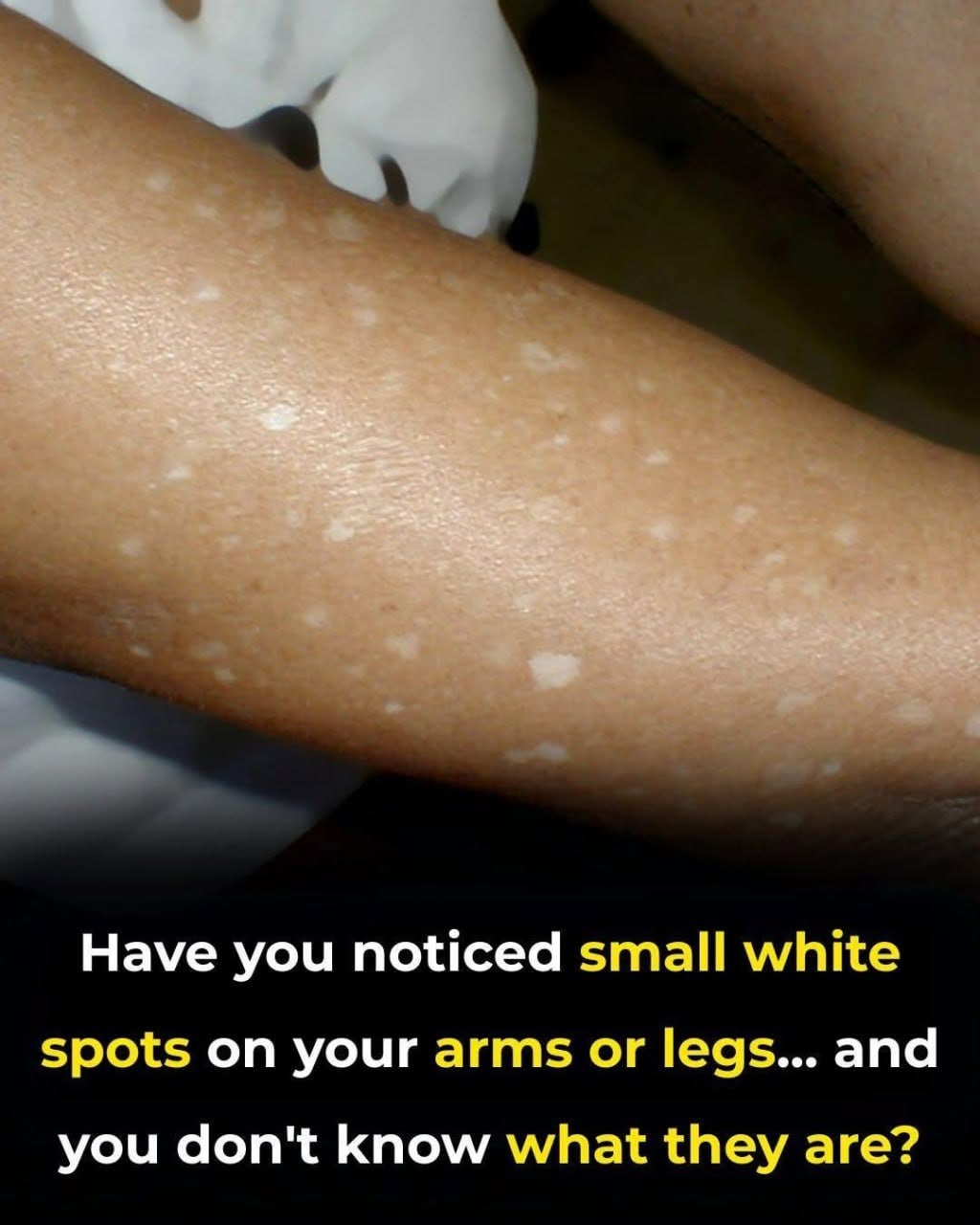
Have You Noticed Small White Spots on Your Arms or Legs? Here’s What They Could Be
Small white spots on your arms or legs can be surprising and sometimes concerning. In many cases, these spots are harmless and related to normal skin changes, but they can also be caused by conditions that may need medical attention.
Understanding the possible causes can help you know when to simply monitor them and when to seek advice from a healthcare professional.
1. Idiopathic Guttate Hypomelanosis (IGH)
One of the most common causes of tiny white spots on the arms and legs is idiopathic guttate hypomelanosis.
These spots are usually:
- Small (often a few millimeters in size)
- Flat and smooth
- White or lighter than surrounding skin
- More noticeable after sun exposure
They are often linked to natural aging and long-term sun exposure. They are harmless and usually do not require treatment.
2. Sun-Related Skin Changes
Repeated sun exposure can affect pigment-producing cells called melanocytes. Over time, some areas of skin may produce less pigment, creating lighter spots.
Helpful steps:
- Use broad-spectrum sunscreen.
- Protect skin from excessive sun exposure.
- Avoid frequent tanning.
3. Vitiligo
Vitiligo occurs when the immune system affects pigment-producing cells, leading to areas of skin losing color.
Signs may include:
- Larger patches of complete depigmentation
- Smooth, sharply defined borders
- Spots that slowly expand or appear in new areas
A dermatologist can help diagnose vitiligo and discuss treatment options.
4. Fungal Skin Infections
Certain fungal infections can cause lighter patches, sometimes with:
- Mild scaling
- Itching
- Changes in texture
These are often treated with antifungal medications, but proper diagnosis is important because not all white spots are fungal.
5. Post-Inflammatory Changes
After skin injuries, rashes, insect bites, burns, or irritation, the skin may temporarily lose some pigment.
The lighter areas may gradually improve as the skin heals.
6. Dry Skin or Skin Conditions
Dryness, eczema, or other skin conditions can sometimes create lighter-looking areas, especially if the skin is rough, flaky, or irritated.
When Should You See a Doctor?
Consider getting medical advice if:
- The spots are spreading quickly.
- They appear suddenly and in large numbers.
- They are completely white with sharp borders.
- There is itching, pain, scaling, or inflammation.
- Hair in the affected area is losing color.
- You are unsure what caused the changes.
What You Can Do Now
- Take clear photos to track whether spots change over time.
- Protect your skin from excessive sun exposure.
- Keep skin moisturized.
- Avoid harsh scrubbing or unproven home remedies.
- Schedule a skin check if the spots are changing or worrying you.
The Bottom Line
Small white spots on the arms or legs are often harmless, especially when they are tiny, stable, and related to normal pigment changes. However, changes in size, number, appearance, or symptoms are worth discussing with a healthcare professional to identify the exact cause.
