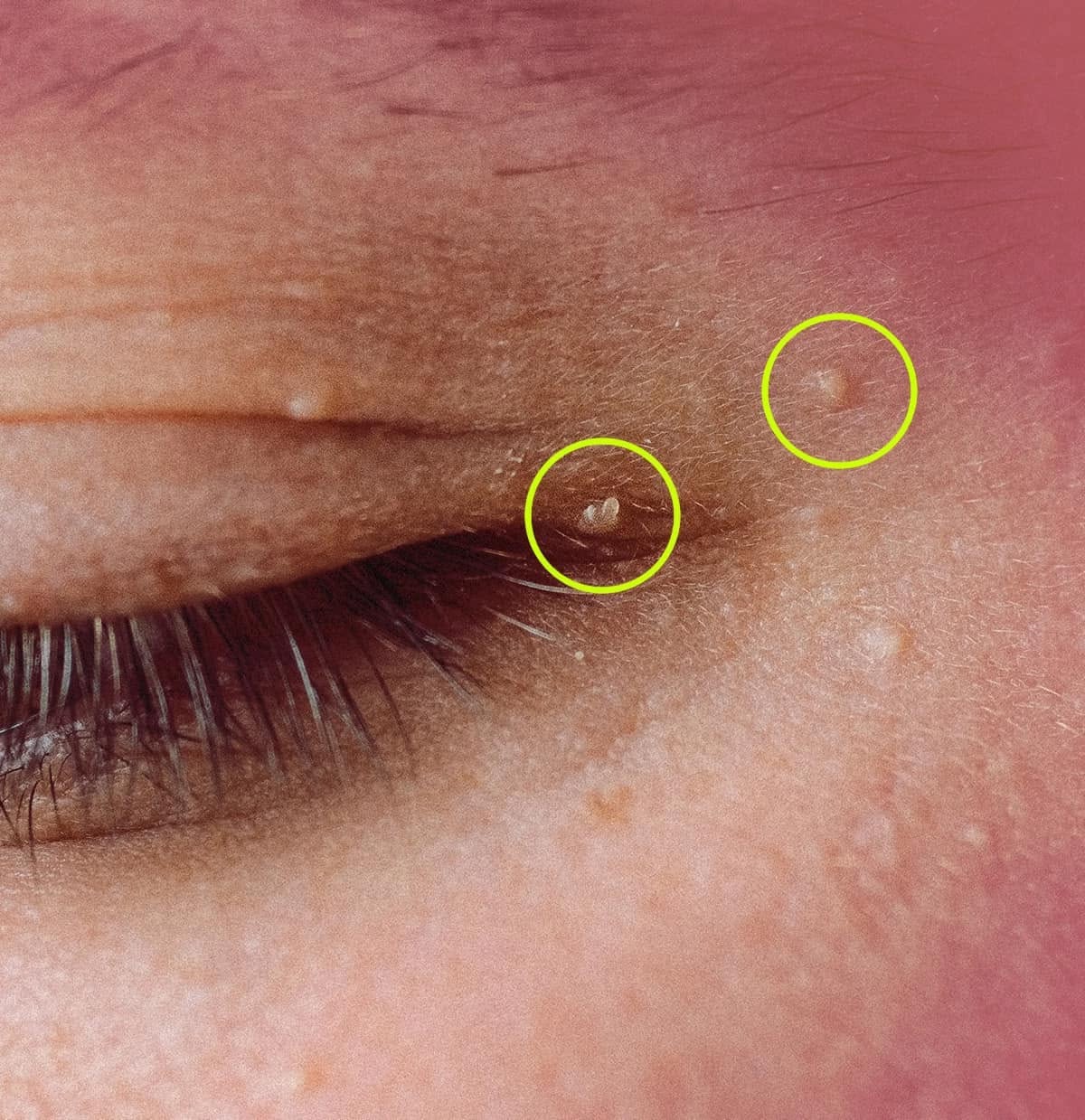
Milia are tiny, white, hard bumps that often appear around the eyes, cheeks, nose, or forehead. They are not actually fat cysts—they are small keratin-filled cysts (keratin is a protein found in skin, hair, and nails). They form when dead skin cells become trapped under the skin’s surface.
How to get rid of milia safely
- Don’t squeeze or pop them
- Milia are not like pimples, and squeezing usually won’t work.
- Picking can cause irritation, scarring, or infection.
- Use gentle exfoliation
- Products with ingredients such as:
- Salicylic acid (BHA)
- Lactic acid or glycolic acid (AHA)
- Retinoids (such as adapalene or prescription retinoids)
- These can help prevent new milia by encouraging skin cell turnover.
- Products with ingredients such as:
- Avoid heavy, pore-clogging products
- Thick creams, oily eye products, or heavy makeup may contribute to some people developing milia.
- Choose “non-comedogenic” skincare when possible.
- Protect your skin from sun damage
- Daily sunscreen helps maintain healthy skin and may reduce the tendency for some types of skin buildup.
- Professional removal
- A dermatologist can remove milia quickly using a sterile technique (often called de-roofing).
- Other options may include chemical peels, laser treatments, or prescription retinoids in selected cases.
When to see a dermatologist
- Milia are spreading or persistent for months
- They appear suddenly in large numbers
- The bumps are irritated, changing, or you’re unsure they are milia
- They occur in a baby or young child and you have concerns
Simple routine that may help
Morning: gentle cleanser → moisturizer → sunscreen
Night: gentle cleanser → retinoid or mild exfoliant (if tolerated) → moisturizer
Avoid harsh scrubs or aggressive home extraction, especially around the eyes.
