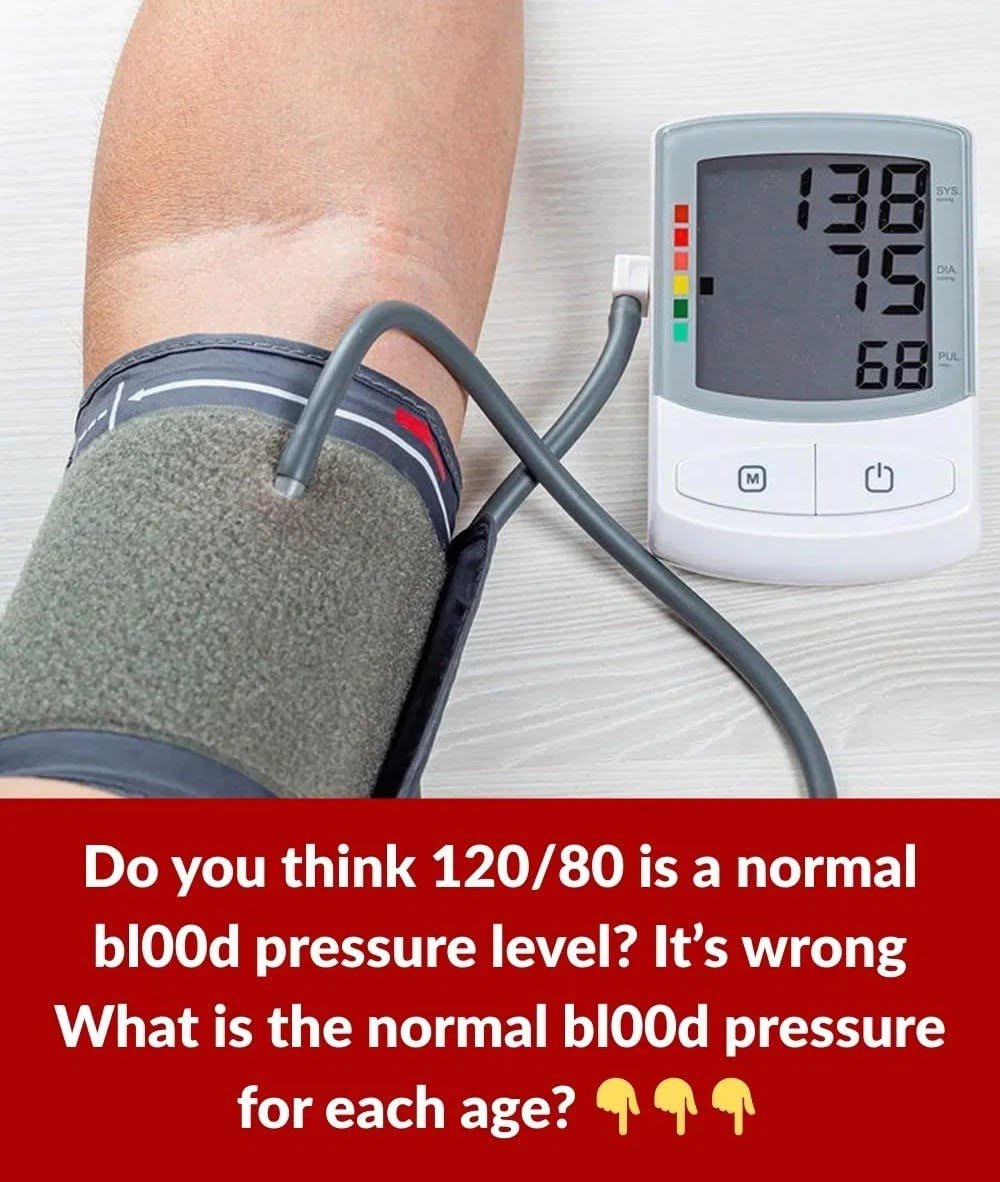
The claim “Everyone has made this mistake. What is the normal blood pressure for each age?” is a bit misleading because there is no separate “normal” blood pressure for every age. While blood pressure tends to rise somewhat with age, the general goal for adults is similar across age groups, with individual targets based on overall health.
General Blood Pressure Guide
| Age Group | Typical Healthy Blood Pressure* |
|---|---|
| Teens (13–18 years) | About 110–120 / 65–80 mmHg |
| Adults (18–39 years) | Less than 120/80 mmHg is considered optimal |
| Adults (40–59 years) | Less than 120/80 mmHg is still ideal, though slightly higher readings become more common |
| Adults (60+ years) | Targets are individualized, but many people benefit from keeping blood pressure below 130/80 mmHg if it can be achieved safely |
*These are general guides, not strict rules for every individual.
Adult Blood Pressure Categories
- Normal: Less than 120/80 mmHg
- Elevated: 120–129 systolic and less than 80 diastolic
- High blood pressure (Stage 1): 130–139 systolic or 80–89 diastolic
- High blood pressure (Stage 2): 140/90 mmHg or higher
- Hypertensive crisis: 180/120 mmHg or higher—seek immediate medical evaluation, especially if accompanied by symptoms such as chest pain, shortness of breath, severe headache, vision changes, or neurological symptoms.
Important notes
- Blood pressure naturally changes throughout the day and can be affected by stress, exercise, caffeine, pain, and illness.
- Older adults do not automatically have a higher “normal” blood pressure. Treatment goals are often personalized based on factors such as heart disease, diabetes, kidney disease, fall risk, and overall health.
- The best way to assess blood pressure is with multiple readings taken on different days, not a single measurement.
If you tell me your age and a recent blood pressure reading, I can help explain what it means in context.
