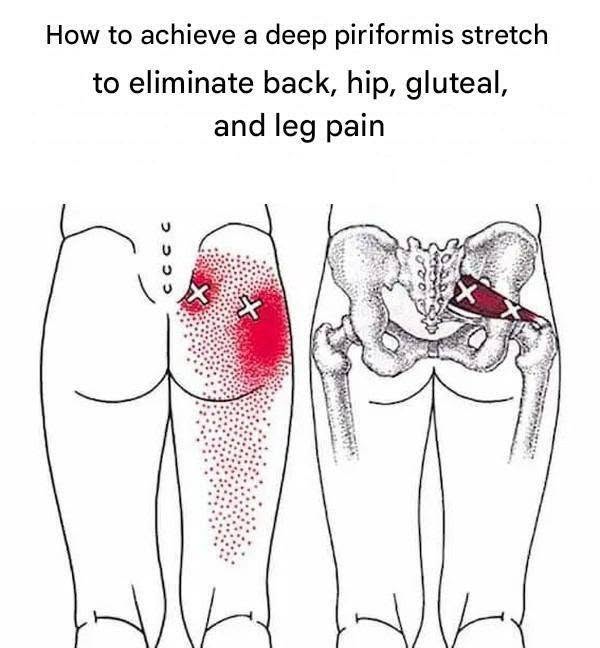
A tight piriformis muscle can contribute to pain in the buttock and, in some people, irritation of the nearby sciatic nerve. However, not all back, hip, gluteal, or leg pain is caused by the piriformis, so it’s important not to assume this stretch is a cure for every type of pain.
Here are a few commonly recommended piriformis stretches:
1. Figure-4 Stretch (Lying Down)
- Lie on your back with both knees bent.
- Cross your right ankle over your left knee.
- Lift your left thigh toward your chest, holding behind the thigh.
- You should feel a gentle stretch in the right buttock.
- Hold for 20–30 seconds, then switch sides.
- Repeat 2–4 times per side.
2. Seated Figure-4 Stretch
- Sit upright in a chair.
- Place one ankle on the opposite knee.
- Keep your back straight and lean forward from your hips until you feel a stretch in the buttock.
- Hold for 20–30 seconds, then repeat on the other side.
3. Knee-to-Opposite-Shoulder Stretch
- Lie on your back.
- Pull one knee toward the opposite shoulder.
- Keep your shoulders relaxed and hold the stretch for 20–30 seconds.
- Repeat on the other side.
Tips
- Stretch gently—avoid bouncing.
- Stop if you feel sharp, shooting, or worsening pain.
- Regular walking and strengthening the hips and core can also help many people with buttock and lower back discomfort.
When to seek medical care
See a healthcare professional if you have:
- Severe or worsening pain
- Leg weakness or numbness
- Loss of bladder or bowel control
- Pain after a significant injury
- Symptoms that persist despite several weeks of self-care
If your pain is caused by a herniated disc, arthritis, spinal stenosis, or another condition, piriformis stretching alone may not relieve it. A proper diagnosis can help guide the most effective treatment.
