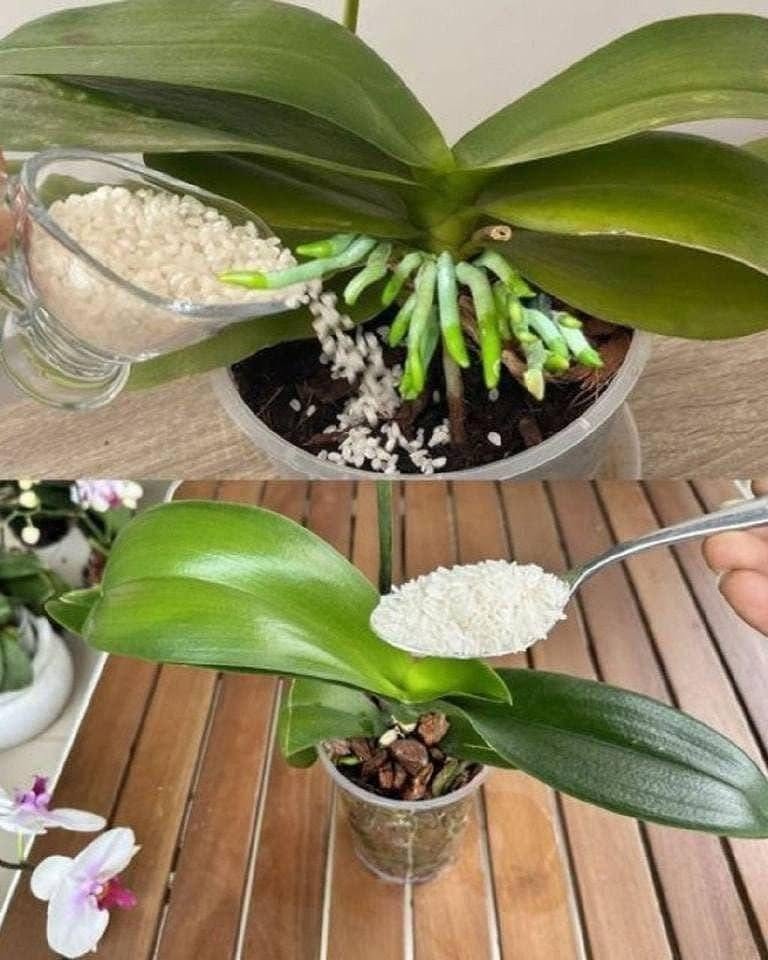
The claim “1 tablespoon is enough, and orchids will bloom non-stop” is an exaggeration. There is no fertilizer that will make orchids bloom continuously. Healthy orchids bloom in natural cycles, and flowering depends on the species, light, temperature, watering, and overall care.
How to help orchids bloom well
1. Use a balanced orchid fertilizer
- Choose a fertilizer made for orchids (for example, a balanced formula such as 20-20-20 or one recommended by the manufacturer).
- Apply it at the recommended strength—many growers use a diluted solution rather than a full-strength dose.
2. Provide enough light
- Most common orchids, such as Phalaenopsis, prefer bright, indirect light.
- Too little light is one of the most common reasons orchids fail to bloom.
3. Water correctly
- Water thoroughly, then allow the potting medium to dry slightly before watering again.
- Avoid letting the roots sit in water.
4. Maintain the right temperature
- Many orchids benefit from slightly cooler nighttime temperatures, which can encourage flower spikes.
5. Use an appropriate potting mix
- Orchids grow best in bark-based mixes or other airy media that allow roots to breathe.
Be cautious with homemade fertilizers
Internet tips suggesting rice water, banana peels, coffee grounds, or a single “magic” ingredient often lack evidence and can sometimes encourage mold, attract pests, or upset the balance of nutrients if overused.
With proper care, many orchids bloom once or twice a year, and the flowers can last for weeks to several months, depending on the variety. Consistent care is much more effective than relying on a single “miracle fertilizer.”
