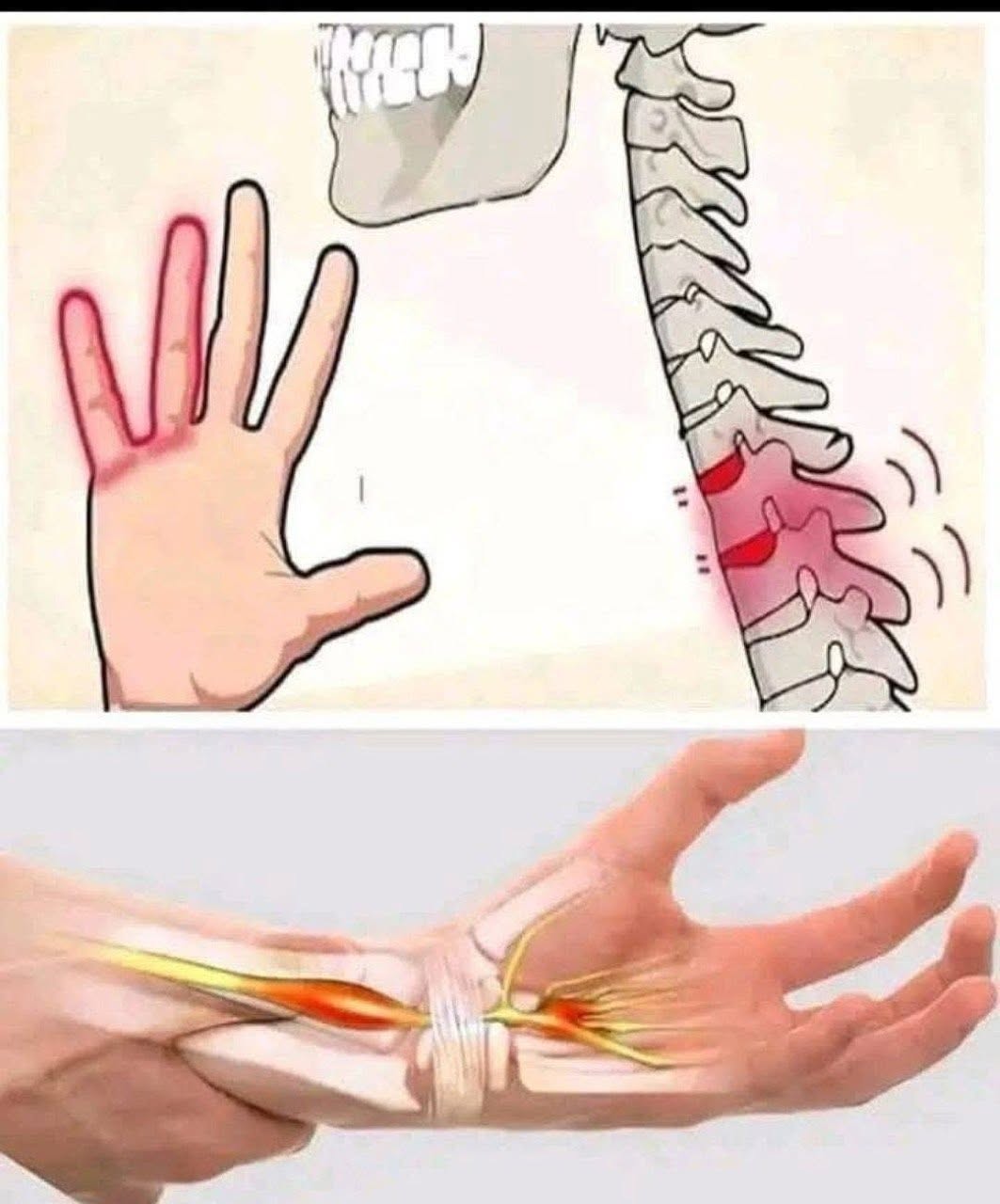
The claim “If your hands fall asleep, it’s a clear sign that you have…” is misleading. There is no single disease that is confirmed just because your hands “fall asleep” (become numb or tingly).
Common causes include:
- Pressure on a nerve: Sleeping with your wrist, arm, or elbow in an awkward position is the most common cause.
- Carpal tunnel syndrome: Can cause numbness and tingling in the thumb, index, middle, and part of the ring finger, often worse at night.
- Pinched nerve in the neck: A cervical spine problem can cause numbness, tingling, or weakness in the arm and hand.
- Peripheral neuropathy: Nerve damage from conditions such as diabetes, vitamin B12 deficiency, or excessive alcohol use can affect the hands.
- Poor circulation: Less commonly, reduced blood flow can contribute to numbness or tingling.
- Certain medical conditions: Some autoimmune disorders or medication side effects can also cause these symptoms.
When to seek medical attention
See a healthcare professional if:
- The numbness happens frequently or keeps returning.
- It lasts for a long time after changing position.
- You have weakness, loss of grip strength, or dropping objects.
- The symptoms involve only one side of the body and are accompanied by facial drooping, trouble speaking, or sudden weakness—these could be signs of a medical emergency such as a stroke.
If your hands only “fall asleep” occasionally after sleeping in an awkward position and the sensation quickly goes away when you move them, it’s usually not a cause for concern. However, persistent or recurring numbness deserves medical evaluation to identify the underlying cause.
