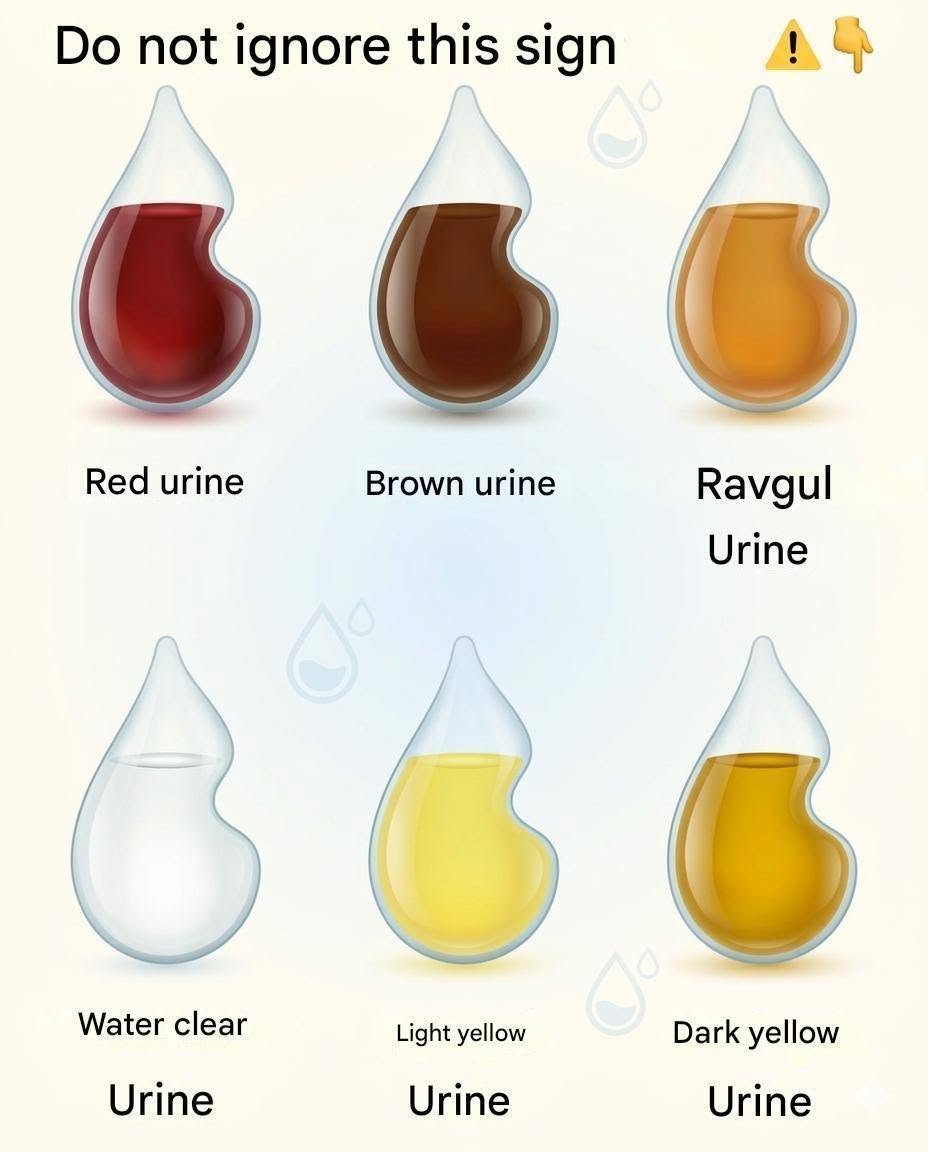
What Does the Color of Your Urine Say About Your Health?
Urine color can provide clues about hydration, diet, medications, and sometimes health conditions. A change in color is not always a cause for concern, but certain patterns deserve attention.
🟡 Pale yellow to clear
Usually normal.
- Pale yellow often suggests good hydration.
- Completely clear urine may mean you are drinking more fluid than you need, though this is not always a problem.
🟨 Dark yellow or amber
Often a sign of dehydration.
- Your urine becomes more concentrated when your body needs more fluids.
What may help:
- Drink water regularly.
- Increase fluids after sweating, exercise, or hot weather.
🟧 Orange urine
Possible causes include:
- Dehydration
- Certain medications
- Some vitamin supplements
- Liver or bile-related problems (especially if accompanied by yellowing of the skin or eyes)
🟤 Brown or tea-colored urine
Possible causes include:
- Severe dehydration
- Certain medications or foods
- Liver problems
- Muscle breakdown (rare but serious)
Persistent brown urine should be checked by a healthcare professional.
🔴 Pink or red urine
Possible causes include:
- Blood in the urine
- Urinary tract infection
- Kidney stones
- Certain foods (such as beets)
- Some medications
Blood in urine should generally be evaluated, especially if it is unexplained.
🟢 Blue or green urine
This is uncommon but may occur due to:
- Certain medications or dyes
- Food coloring
- Some infections (rare)
⚪ Cloudy urine
Possible causes include:
- Dehydration
- Urinary tract infection
- Kidney stones
- Crystals or other substances in urine
When to seek medical advice
Contact a healthcare professional if you notice:
- Blood in your urine
- Persistent unusual color without an obvious cause
- Pain or burning when urinating
- Fever, back/flank pain, or feeling unwell
- A major change in urination habits
Simple takeaway
For many people, light yellow urine is a common sign of adequate hydration. But urine color should be considered along with other symptoms, medications, diet, and overall health—not used as the only indicator of a medical problem.
