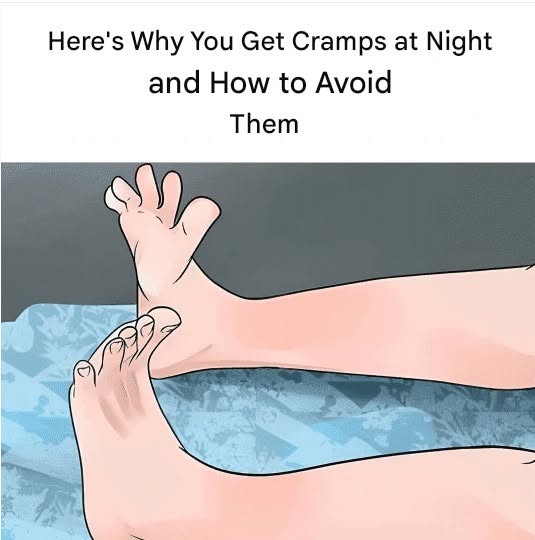
Nighttime cramps—especially leg cramps—are common, and they can happen for many reasons. The idea that there is one single cause is usually too simple.
Possible reasons you may get cramps at night include:
- Muscle fatigue or overuse
- Long periods of standing, walking, exercise, or unfamiliar activity can strain muscles.
- Dehydration
- Not drinking enough fluids, especially after sweating, may contribute to muscle cramping.
- Electrolyte changes
- Low levels of minerals such as magnesium, potassium, or calcium can be involved in some cases, though supplements do not help everyone.
- Reduced blood flow or nerve irritation
- Circulation problems or nerve conditions can sometimes contribute to cramps or discomfort.
- Medications
- Some medicines (including certain diuretics and cholesterol-lowering drugs) may be associated with muscle cramps in some people.
- Changes that come with aging
- Muscle loss, changes in tendons, and reduced flexibility can make cramps more common.
What may help prevent nighttime cramps
- Stretch calf and leg muscles gently before bed.
- Stay hydrated throughout the day.
- Wear supportive footwear during the day.
- Avoid sudden increases in exercise intensity.
- Keep legs warm if cold temperatures trigger cramps.
During a cramp
- Gently stretch the affected muscle.
- Massage the area.
- Apply warmth if it feels soothing.
Talk with a healthcare professional if cramps are new, severe, frequent, causing weakness, associated with swelling/redness, or accompanied by numbness or changes in walking—especially if they started after a new medication.
