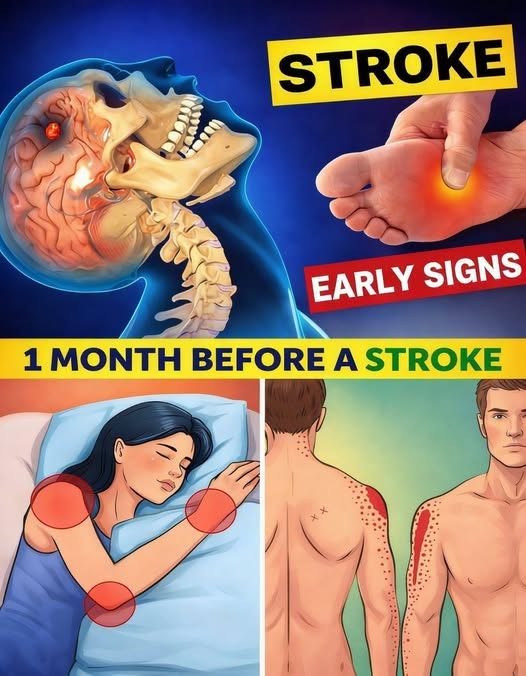
A stroke usually happens suddenly, and there is no reliable checklist of symptoms that can predict a stroke exactly one month before it occurs. However, some people may experience warning events or risk-related changes before a stroke—especially a transient ischemic attack (TIA), sometimes called a “mini-stroke.” A TIA can cause stroke-like symptoms that resolve within minutes or hours and is a medical emergency because it can be a warning sign of a future stroke.
Possible warning signs that should never be ignored
Seek urgent medical help if you experience:
- Sudden weakness or numbness of the face, arm, or leg—especially on one side of the body
- Sudden trouble speaking or understanding speech
- Sudden confusion
- Sudden vision changes in one or both eyes
- Sudden dizziness, loss of balance, or difficulty walking
- A sudden severe headache with no known cause
- New facial drooping (one side of the face feels weak or looks uneven)
- Sudden difficulty coordinating movements
A simple way to remember common stroke signs is FAST:
- F — Face drooping
- A — Arm weakness
- S — Speech difficulty
- T — Time to call emergency services
9 ways to reduce stroke risk
- Control blood pressure — high blood pressure is one of the strongest stroke risk factors.
- Do not smoke and avoid tobacco products.
- Manage diabetes and keep blood sugar in a healthy range.
- Maintain healthy cholesterol levels.
- Exercise regularly (as recommended for your health status).
- Eat a heart-healthy diet with vegetables, fruits, whole grains, legumes, and healthy proteins.
- Maintain a healthy weight.
- Limit alcohol intake.
- Take prescribed medications correctly, especially for blood pressure, cholesterol, or heart rhythm conditions.
If someone develops stroke symptoms—even if they disappear—treat it as an emergency. Fast medical evaluation can prevent a more serious stroke.
