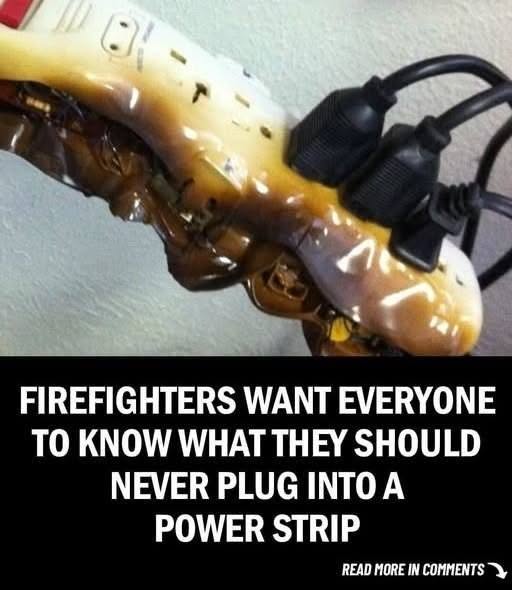
A more accurate title would be:
12 Things You Should Never Plug Into a Power Strip
Power strips are convenient for low-power electronics, but they are not designed for high-wattage appliances. Plugging certain devices into a power strip can overload the circuit, overheat the strip, and increase the risk of electrical fires.
1. Space heaters
Portable heaters draw a large amount of electricity and can overload many power strips. They should usually be plugged directly into a wall outlet.
2. Air conditioners
Window and portable air conditioners require high startup and running power that many power strips cannot safely handle.
3. Refrigerators and freezers
These appliances use compressors that create power surges when starting. A dedicated wall outlet is generally recommended.
4. Microwaves
Microwaves consume high amounts of power and should be connected directly to a properly rated outlet.
5. Toasters and toaster ovens
Heating appliances draw significant current and can cause a power strip to overheat.
6. Coffee makers
Coffee machines with heating elements can exceed the safe load of many power strips, especially when combined with other devices.
7. Electric kettles
Like other heating appliances, kettles can quickly use a large amount of electricity.
8. Hair dryers and curling irons
These bathroom appliances often use high wattage and are better plugged directly into a wall outlet.
9. Washing machines
Large motor-driven appliances should generally have their own dedicated outlets.
10. Sump pumps
Because they use powerful motors and may run during emergencies, sump pumps should not be connected to ordinary power strips.
11. Power tools
Drills, saws, and other tools can create high startup loads that may damage a power strip or trip a breaker.
12. Another power strip or extension cord
“Daisy chaining” power strips or extension cords can increase the risk of overheating and electrical failure.
Safer Power Strip Tips
- Check the power strip’s maximum wattage or amperage rating before use.
- Avoid covering power strips with rugs, blankets, or furniture where heat can build up.
- Replace strips that are cracked, melted, discolored, or have loose outlets.
- Use surge protectors for sensitive electronics like computers and TVs, but remember they are not substitutes for proper electrical circuits.
- Plug high-power appliances directly into a wall outlet whenever possible.
A power strip is best for low-power electronics such as phone chargers, lamps, routers, and small computer accessories—not appliances that generate heat or use motors.
