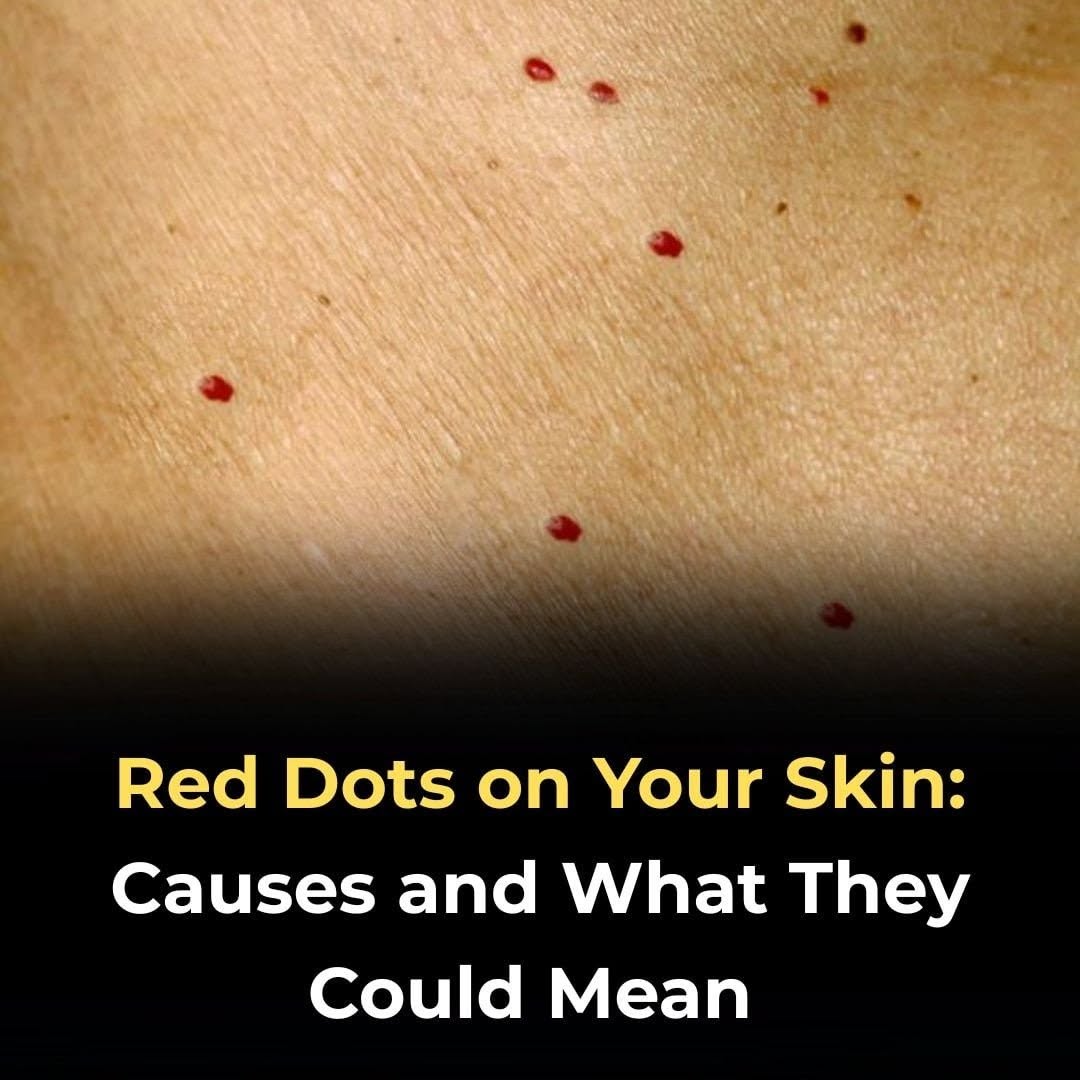
If You Spot These Red Dots on Your Skin, Here’s What They May Mean
Small red dots on the skin can be surprising, but they are often harmless. Their meaning depends on their appearance, location, how quickly they appeared, and whether they are changing.
Here are some common causes of red spots:
1. Cherry angiomas
These are among the most common causes of small, bright-red dots on the skin.
Typical features:
- Small (often pinhead-sized)
- Bright red, cherry-colored, or purple
- Smooth and round
- Common on the chest, back, arms, and shoulders
- More common with increasing age
They are usually benign (non-cancerous) and do not require treatment unless they bleed, become irritated, or are removed for cosmetic reasons.
2. Petechiae (tiny bleeding spots under the skin)
Petechiae are tiny red, purple, or brownish dots caused by small amounts of bleeding under the skin.
They may occur after:
- Intense coughing or straining
- Minor injury or pressure
- Certain medications
- Low platelet levels or blood disorders
Seek medical advice if petechiae appear suddenly, spread quickly, or occur with fever, unusual bruising, or feeling very unwell.
3. Insect bites or skin irritation
Red dots may result from:
- Mosquito or insect bites
- Allergic reactions
- Contact with irritating products
- New soaps, detergents, or skincare products
These are often itchy and may improve after removing the trigger.
4. Folliculitis
Inflamed hair follicles can appear as small red bumps, sometimes with:
- Tenderness
- Pus-filled centers
- Itching
It may be caused by bacteria, friction, sweating, or shaving.
5. Allergic reactions
Skin allergies can cause red spots along with:
- Itching
- Swelling
- Hives
- Rash that moves or changes location
6. Heat rash
Blocked sweat glands can cause clusters of small red bumps, especially in hot or humid conditions.
7. Medication-related skin changes
Some medicines can cause rashes, bruising, or red spots. If a new rash appears after starting a medication, speak with a healthcare professional.
When Red Dots Need Medical Attention
Contact a healthcare professional if you notice:
- Red dots that appear suddenly and spread quickly
- Spots that do not fade when pressed (especially with other symptoms)
- Unexplained bruising or bleeding
- Fever, weakness, or severe illness
- A spot that changes shape, color, or size
- Persistent itching, pain, or bleeding
A Simple Check
You can gently press a clear glass against a red spot:
- If it fades under pressure, it may be due to blood vessels widening near the surface.
- If it does not fade, it may represent bleeding under the skin and deserves more attention, especially if new or widespread.
Most small red dots—especially stable cherry angiomas—are harmless. However, new, rapidly changing, widespread, or unexplained spots should be checked by a healthcare professional.
