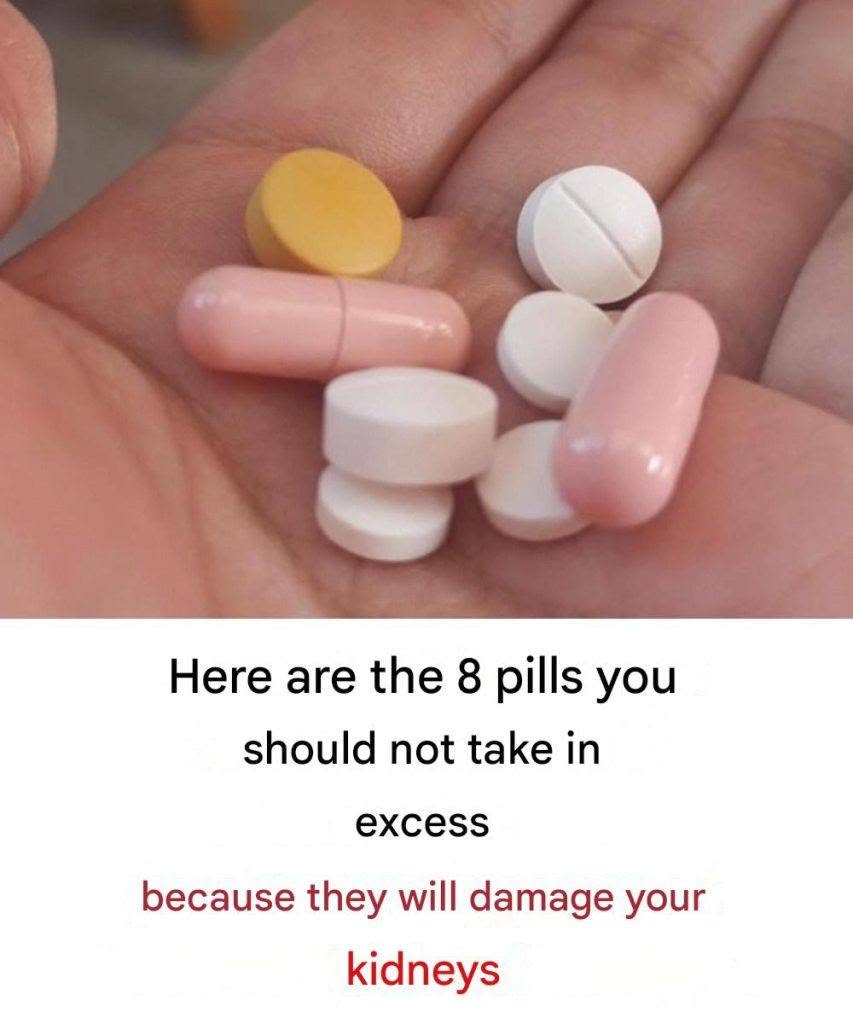
The headline “Eight pills you shouldn’t take because they damage your kidneys” is misleading and overly broad.
Some medications can affect kidney function in certain people, especially at high doses, with long-term use, during dehydration, or when combined with other medicines. However, many of these medications are also important and safe when used correctly under medical guidance.
Examples of medicines that may require kidney caution include:
- Certain pain relievers (NSAIDs)
- Examples include ibuprofen and naproxen.
- Long-term or high-dose use may reduce kidney blood flow and increase kidney risk, especially in people with kidney disease, older adults, or those who are dehydrated.
- Some antibiotics
- Certain antibiotics can affect the kidneys and may require dose adjustments based on kidney function.
- Some antiviral medicines
- A few antiviral drugs can require kidney monitoring.
- Certain blood pressure medicines
- Some medications that affect the kidney’s blood flow may require monitoring of kidney function and potassium levels.
- Diuretics (“water pills”)
- These can affect fluid balance and electrolytes, especially if not monitored properly.
- Some heart medications
- Certain medicines may need dose adjustments depending on kidney function.
- Some chemotherapy drugs
- Some cancer treatments can be hard on the kidneys and are monitored carefully.
- Certain supplements or herbal products
- Some unregulated products may contain substances that can harm kidneys or interact with medications.
Protecting your kidneys:
- Avoid taking unnecessary medications or supplements.
- Follow dosing instructions.
- Stay appropriately hydrated (unless your doctor has given you fluid restrictions).
- Have kidney function checked if you use medicines that can affect the kidneys.
Bottom line: There is no universal list of “eight pills everyone should never take.” The real issue is using certain medications without proper guidance, monitoring, or consideration of your personal health conditions. Never stop a prescribed medicine based only on a viral warning—ask your healthcare professional first.
