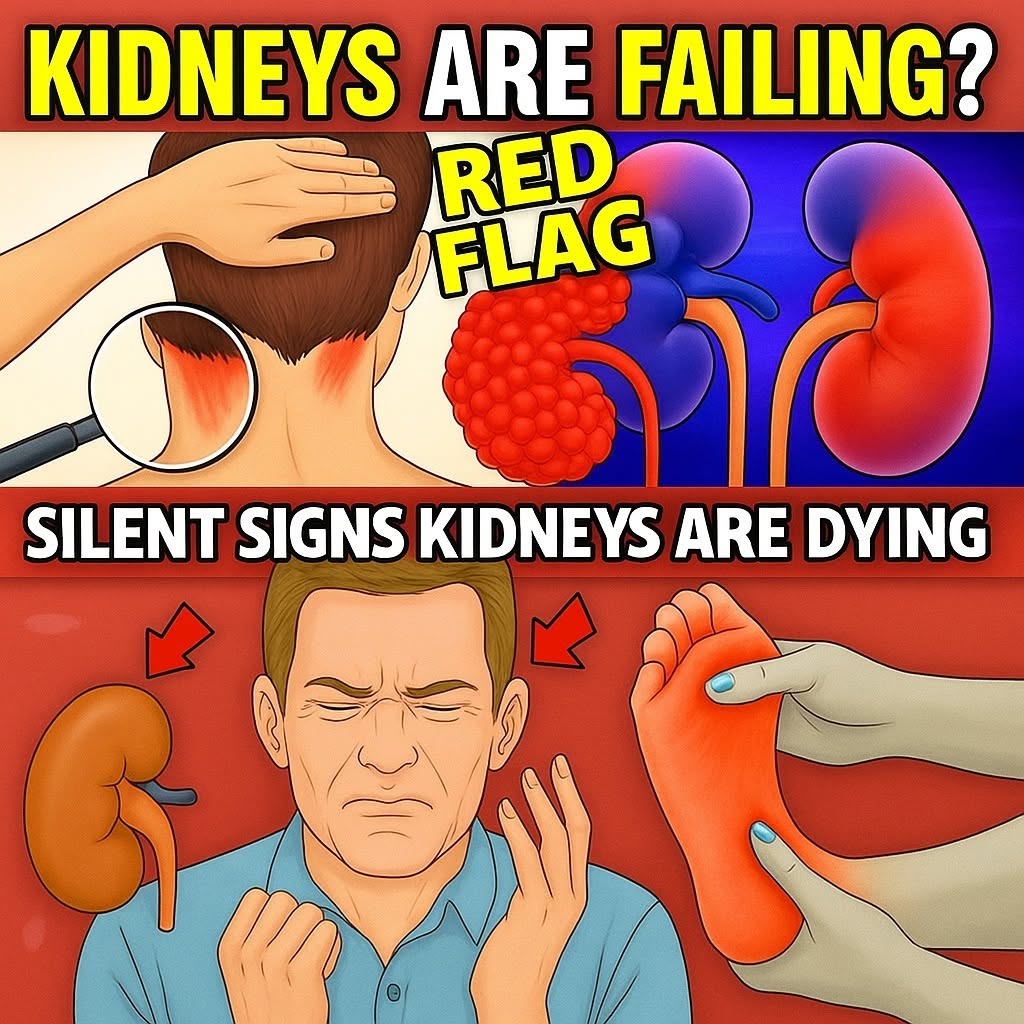
The headline “10 Silent Signs Your Kidneys Are Failing — Most People Miss These!” is partly true but often exaggerated.
Kidney disease can develop quietly, especially in its early stages, because the kidneys can lose function before causing noticeable symptoms. However, there is no single list of “silent signs” that proves kidney failure. The only reliable way to check kidney function is through medical testing.
Possible signs that may occur as kidney problems become more advanced include:
- Changes in urination
- Needing to urinate more often (especially at night)
- Urinating much less than usual
- Foamy urine or blood in urine
- Swelling (edema)
- Puffiness around the eyes
- Swelling in the feet, ankles, or legs
- Persistent tiredness
- Kidney problems can contribute to anemia and reduced energy.
- Difficulty concentrating
- Waste buildup in the body can affect how some people feel mentally.
- Itchy or dry skin
- Can occur with advanced kidney disease.
- Muscle cramps
- May be related to changes in electrolytes.
- Nausea or poor appetite
- More common in later stages.
- Shortness of breath
- Can occur from fluid buildup or anemia.
- High blood pressure
- Kidney disease and high blood pressure are closely linked.
- Changes in taste or bad breath
- Can occur when waste products build up.
People at higher risk should consider regular kidney checks:
- People with diabetes
- People with high blood pressure
- Those with a family history of kidney disease
- Older adults
- People who frequently use certain pain medicines
Bottom line: Kidney problems can be silent, but viral headlines often make normal symptoms sound more alarming than they are. Blood tests (such as creatinine and eGFR) and urine tests are the best ways to detect kidney issues early. If you have symptoms or risk factors, discuss screening with a healthcare professional.
