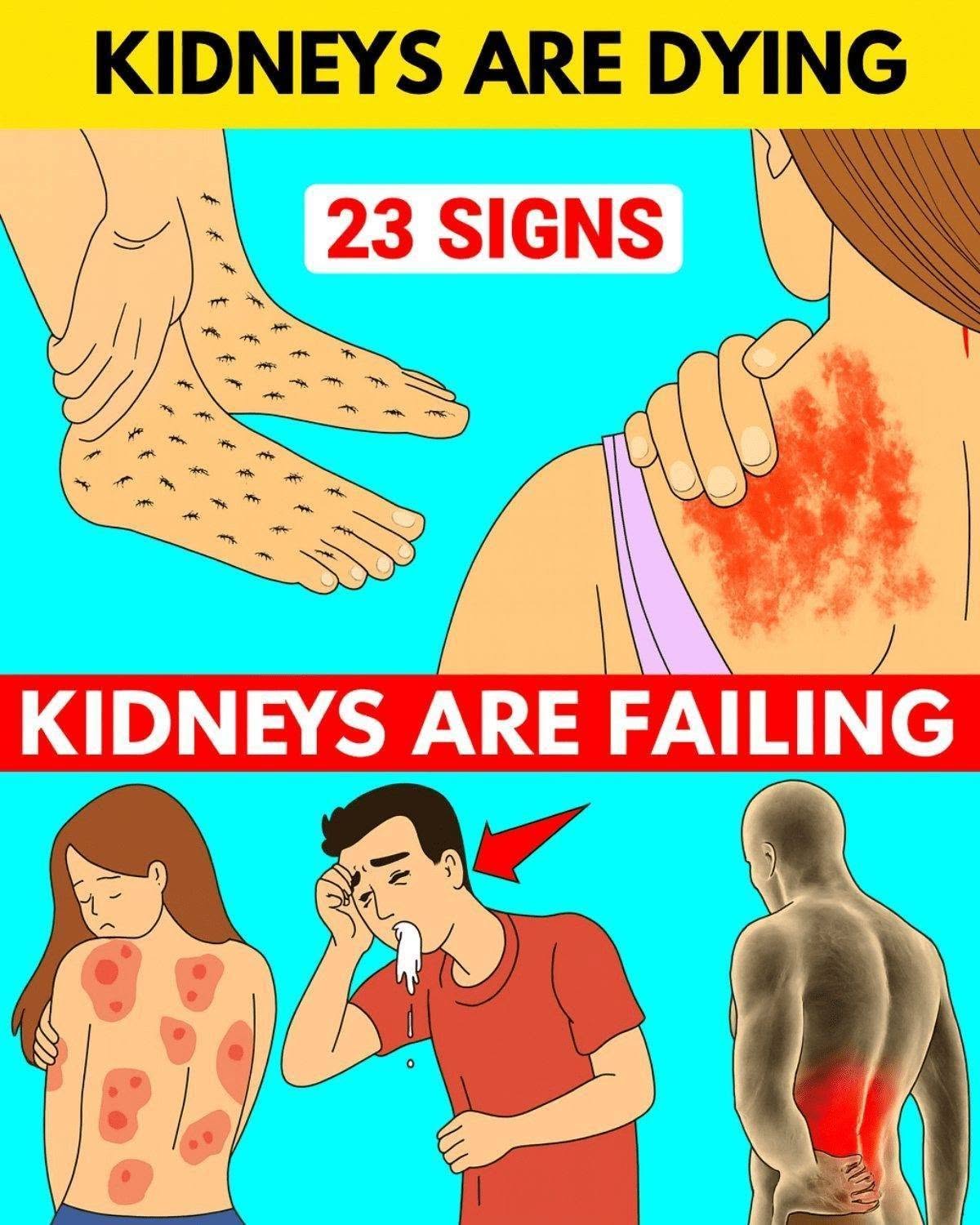
23 Strange Signs Your Kidneys Might Be in Trouble
Your kidneys filter waste from your blood, balance fluids, help control blood pressure, and support healthy red blood cell production. Kidney problems can develop slowly, and early symptoms may be subtle. Many signs are not specific to kidney disease, but they are worth discussing with a healthcare professional if they persist.
1. Changes in urination
- Urinating much more often, especially at night
- Urinating much less than usual
- Foamy or bubbly urine
- Blood in the urine
- Urine that is unusually dark or cloudy
2. Swelling in the body
When kidneys struggle to remove extra fluid, you may notice:
- Swollen ankles or feet
- Puffy eyelids, especially in the morning
- Tight rings or shoes
3. Unusual tiredness
Kidney disease can contribute to anemia and waste buildup, which may cause:
- Low energy
- Weakness
- Trouble concentrating
4. Itchy skin
Persistent itching can occur when waste products build up in the blood.
5. Dry or irritated skin
Changes in fluid balance can affect skin comfort.
6. Muscle cramps
Electrolyte imbalances related to kidney problems may contribute to cramps or twitching.
7. Loss of appetite
Some people with kidney problems experience reduced appetite or changes in taste.
8. Nausea or vomiting
Waste buildup can affect the digestive system in more advanced kidney disease.
9. Bad taste in the mouth or ammonia-like breath
This can occur when waste products accumulate.
10. Shortness of breath
Fluid buildup or anemia related to kidney disease may contribute to breathing difficulties.
11. High blood pressure
Kidney problems can both contribute to and result from high blood pressure.
12. Difficulty sleeping
Symptoms such as itching, cramps, or restless legs may interfere with sleep.
13. Restless legs
Some people with chronic kidney disease experience uncomfortable sensations in their legs.
14. Back or side discomfort
Pain in the kidney area may occur with certain kidney conditions, infections, or stones.
15. Fever with urinary symptoms
Fever, pain during urination, or back pain may suggest a kidney infection and needs medical attention.
16. Unexplained weight changes
Rapid weight gain from fluid retention or weight loss from illness can be warning signs.
17. Dizziness or weakness
This may occur with anemia, blood pressure changes, or fluid imbalance.
18. Trouble controlling blood pressure
Kidneys play an important role in regulating blood pressure.
19. Frequent urinary tract infections
Repeated infections may sometimes affect kidney health.
20. Changes in skin color or appearance
Some people with advanced kidney disease notice changes related to waste buildup or anemia.
21. Difficulty thinking clearly
Severe kidney dysfunction can affect concentration and mental clarity.
22. Metallic taste or reduced taste sensation
Waste buildup may alter taste perception.
23. Feeling generally unwell
A vague sense of illness, fatigue, or reduced well-being can occur with many conditions, including kidney problems.
Who is at higher risk for kidney disease?
Risk is higher with:
- Diabetes
- High blood pressure
- Heart disease
- Family history of kidney disease
- Older age
- Frequent use of certain pain medicines (especially excessive NSAID use)
Ways to protect your kidneys
✅ Keep blood pressure under control
✅ Manage blood sugar if you have diabetes
✅ Stay physically active
✅ Eat a balanced diet with appropriate salt intake
✅ Avoid unnecessary high-dose supplements or medications
✅ Get kidney function checked if you are at risk
Important: Early kidney disease often has few or no symptoms. Simple blood and urine tests can detect kidney problems before they become severe.
Seek urgent medical care for blood in urine, severe swelling, sudden confusion, inability to urinate, chest pain, or severe shortness of breath.
