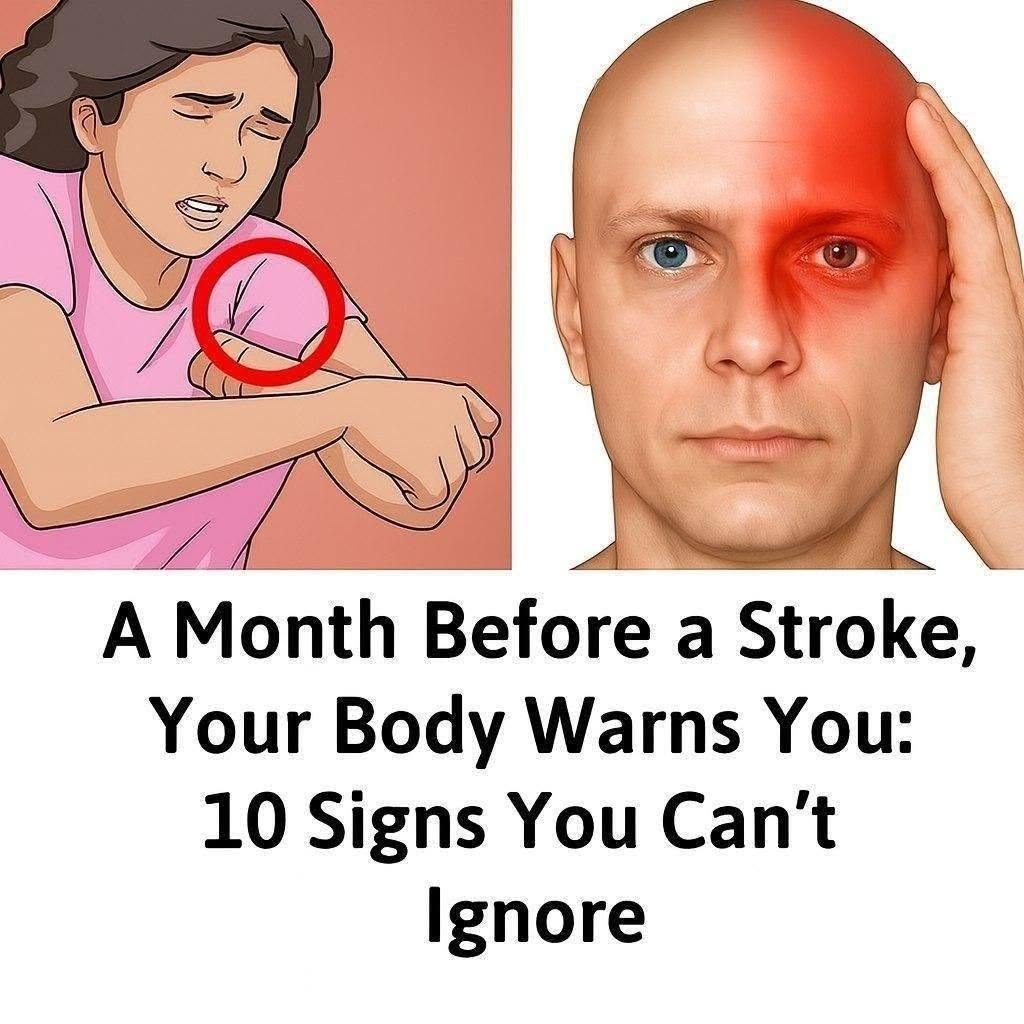
Can Your Body Warn You a Month Before a Stroke? 10 Signs to Take Seriously
The idea that everyone gets a warning a month before a stroke is a myth. Some people have no warning signs at all, while others experience symptoms hours, days, or occasionally weeks beforehand—often due to a Transient ischemic attack (also called a mini-stroke). A TIA is a medical emergency because it can signal a high risk of a future stroke.
1. Sudden weakness or numbness
Especially if it affects:
- One side of the face
- One arm
- One leg
2. Difficulty speaking
You may notice:
- Slurred speech
- Trouble finding words
- Difficulty understanding others
3. Sudden vision changes
Examples include:
- Blurred vision
- Double vision
- Loss of vision in one or both eyes
4. Loss of balance or coordination
New difficulty walking, dizziness, or unsteadiness may be a warning sign.
5. Sudden severe headache
A sudden, intense headache unlike your usual headaches—particularly if accompanied by other neurological symptoms—requires immediate medical evaluation.
6. Sudden confusion
Difficulty thinking clearly, following conversations, or understanding language can occur during a TIA or stroke.
7. Dizziness
Sudden dizziness, especially when combined with other symptoms such as weakness or vision changes, should not be ignored.
8. Trouble swallowing
New difficulty swallowing can sometimes occur with a stroke.
9. Sudden fatigue or unusual weakness
Fatigue by itself is not a reliable predictor of stroke, but if it occurs together with other neurological symptoms, seek medical attention promptly.
10. Brief episodes of stroke-like symptoms that go away
Even if symptoms last only a few minutes and then disappear, they could be a TIA. This is not something to “wait and see.”
Remember FAST
- F – Face: Ask the person to smile. Does one side droop?
- A – Arms: Ask them to raise both arms. Does one arm drift downward?
- S – Speech: Is speech slurred or strange?
- T – Time: Call emergency services immediately.
Reduce your stroke risk
You can lower your risk by:
- Controlling high blood pressure
- Managing diabetes and cholesterol
- Not smoking
- Exercising regularly
- Eating a balanced diet
- Taking prescribed medications as directed
Bottom line
There is no guaranteed one-month warning period before a stroke. However, sudden neurological symptoms—even if they disappear—should always be treated as an emergency because rapid evaluation can help prevent a major stroke.
