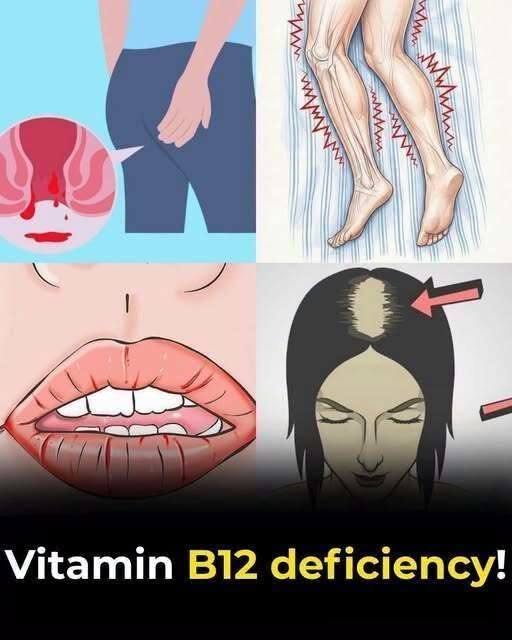
8 Signs That May Suggest a Vitamin B12 Deficiency
Vitamin B12 is essential for making red blood cells, maintaining healthy nerves, and supporting normal brain function. A deficiency can develop gradually and may cause a wide range of symptoms.
Keep in mind that these symptoms are not specific to vitamin B12 deficiency and can have many other causes. A blood test is usually needed to confirm the diagnosis.
1. Tingling or numbness in the hands and feet
Low B12 can affect the nerves, leading to a “pins and needles” sensation or numbness.
2. Unusual fatigue or weakness
A deficiency can reduce the body’s ability to make healthy red blood cells, resulting in anemia and persistent tiredness.
3. Problems with balance or walking
Nerve damage from prolonged B12 deficiency may make it harder to stay balanced or walk steadily.
4. Memory or concentration difficulties
Some people experience forgetfulness, confusion, or difficulty concentrating. These symptoms can have many causes, so they should be evaluated rather than assumed to be due to B12.
5. A sore, smooth, or red tongue
Inflammation of the tongue (glossitis) can occur with B12 deficiency and may make eating uncomfortable.
6. Pale or slightly yellow skin
Anemia caused by B12 deficiency may make the skin look paler than usual. In some cases, a mild yellow tint can develop.
7. Mood changes
Some people with B12 deficiency report symptoms such as low mood or irritability. These symptoms alone do not diagnose a deficiency.
8. Vision changes
In rare, severe cases, untreated B12 deficiency can affect the optic nerve, leading to blurred vision or other visual problems.
Who Is at Higher Risk?
Vitamin B12 deficiency is more common in:
- Older adults
- People following a vegan diet without B12 supplementation
- People with conditions that reduce nutrient absorption
- People taking long-term metformin or certain acid-reducing medications
How Is It Diagnosed?
A healthcare professional may recommend:
- A blood test for vitamin B12
- Additional blood tests if needed to determine the cause
Treatment
Treatment depends on the cause and severity of the deficiency and may include:
- Oral vitamin B12 supplements
- Vitamin B12 injections in some cases
- Treating the underlying reason for the deficiency
When to Seek Prompt Medical Care
Seek medical evaluation if you develop:
- New numbness or weakness
- Difficulty walking
- Significant confusion
- Vision changes
Early treatment is important because long-standing nerve damage from vitamin B12 deficiency may not be completely reversible.
Bottom line
Vitamin B12 deficiency is a treatable condition, but its symptoms overlap with many other health problems. If you think you may be deficient, the safest next step is to discuss your symptoms with a healthcare professional and have appropriate testing rather than starting supplements based on symptoms alone.
