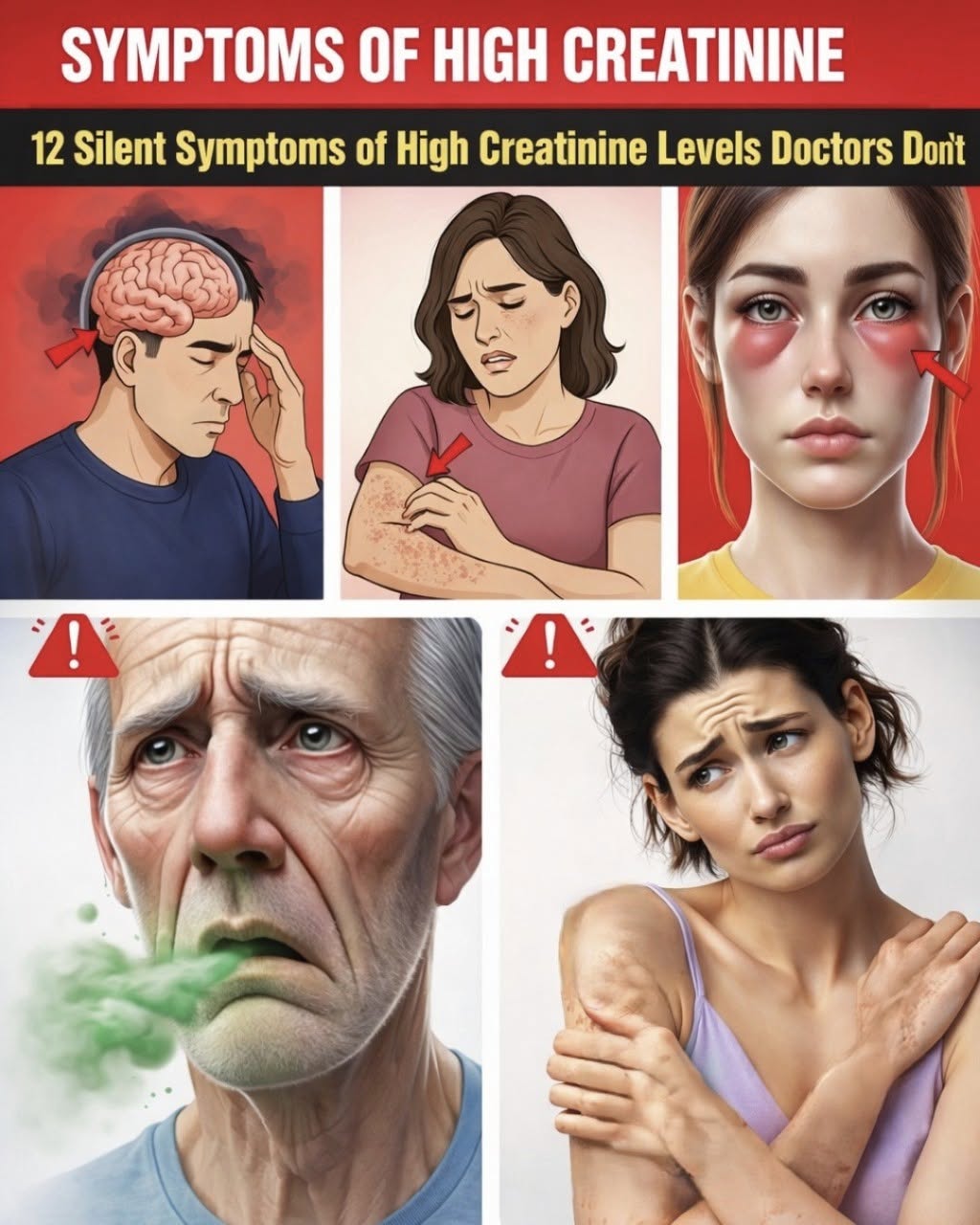
12 Silent Signs That May Be Associated With High Creatinine
Creatinine is a waste product produced by your muscles and removed from the body by your kidneys. A high creatinine level is a laboratory finding—not a disease itself. It may indicate that the kidneys are not filtering blood as well as they should, but levels can also be affected by factors such as dehydration, certain medications, or muscle mass.
Importantly, many people with mildly elevated creatinine have no symptoms at all. Symptoms usually appear when kidney function is significantly impaired or another underlying condition is present.
1. Persistent fatigue
Reduced kidney function can lead to a buildup of waste products or anemia, causing ongoing tiredness and low energy.
2. Swelling in the legs, ankles, or feet
The kidneys help regulate fluid balance. Poor kidney function may lead to fluid retention.
3. Changes in urination
You may notice:
- Urinating more or less than usual
- Foamy urine
- Blood in the urine
- Frequent nighttime urination
4. Shortness of breath
Fluid buildup or anemia associated with kidney disease can make breathing more difficult.
5. Loss of appetite
As waste products accumulate, some people experience decreased appetite or early fullness.
6. Nausea or vomiting
These symptoms are more common in advanced kidney disease.
7. Itchy skin
Persistent itching can occur when waste products build up in the bloodstream.
8. Muscle cramps
Electrolyte imbalances may contribute to muscle cramps, particularly in the legs.
9. Difficulty concentrating
Some people experience problems with memory, focus, or mental clarity when kidney function is significantly reduced.
10. High blood pressure
High blood pressure is both a cause and a consequence of chronic kidney disease.
11. Puffiness around the eyes
Fluid retention may cause swelling around the eyes, especially in the morning.
12. Metallic taste or bad breath
In advanced kidney disease, waste buildup can alter taste or cause an unpleasant breath odor.
Why these signs can be missed
Early kidney disease often causes few or no noticeable symptoms, which is why routine blood and urine tests are so important for people at higher risk, such as those with:
- Diabetes
- High blood pressure
- Heart disease
- A family history of kidney disease
- Older age
A healthcare professional is unlikely to “miss” a high creatinine level if appropriate blood tests are performed. The challenge is that early kidney disease may not produce symptoms that prompt testing.
How to protect your kidneys
- Keep blood pressure and blood sugar well controlled.
- Stay hydrated unless your healthcare provider has advised fluid restriction.
- Avoid excessive use of NSAID pain relievers (such as ibuprofen or naproxen).
- Eat a balanced diet and limit excess salt.
- Have kidney function checked if you’re at increased risk.
When to seek immediate medical care
Seek urgent evaluation if you develop:
- Inability to urinate
- Severe shortness of breath
- Chest pain
- Confusion or extreme drowsiness
- Rapidly worsening swelling
- Blood in the urine with severe pain or fever
Bottom line
High creatinine itself usually does not cause symptoms. Instead, symptoms come from the underlying kidney problem or its complications. Regular checkups and laboratory testing are the most reliable way to detect kidney disease early.
