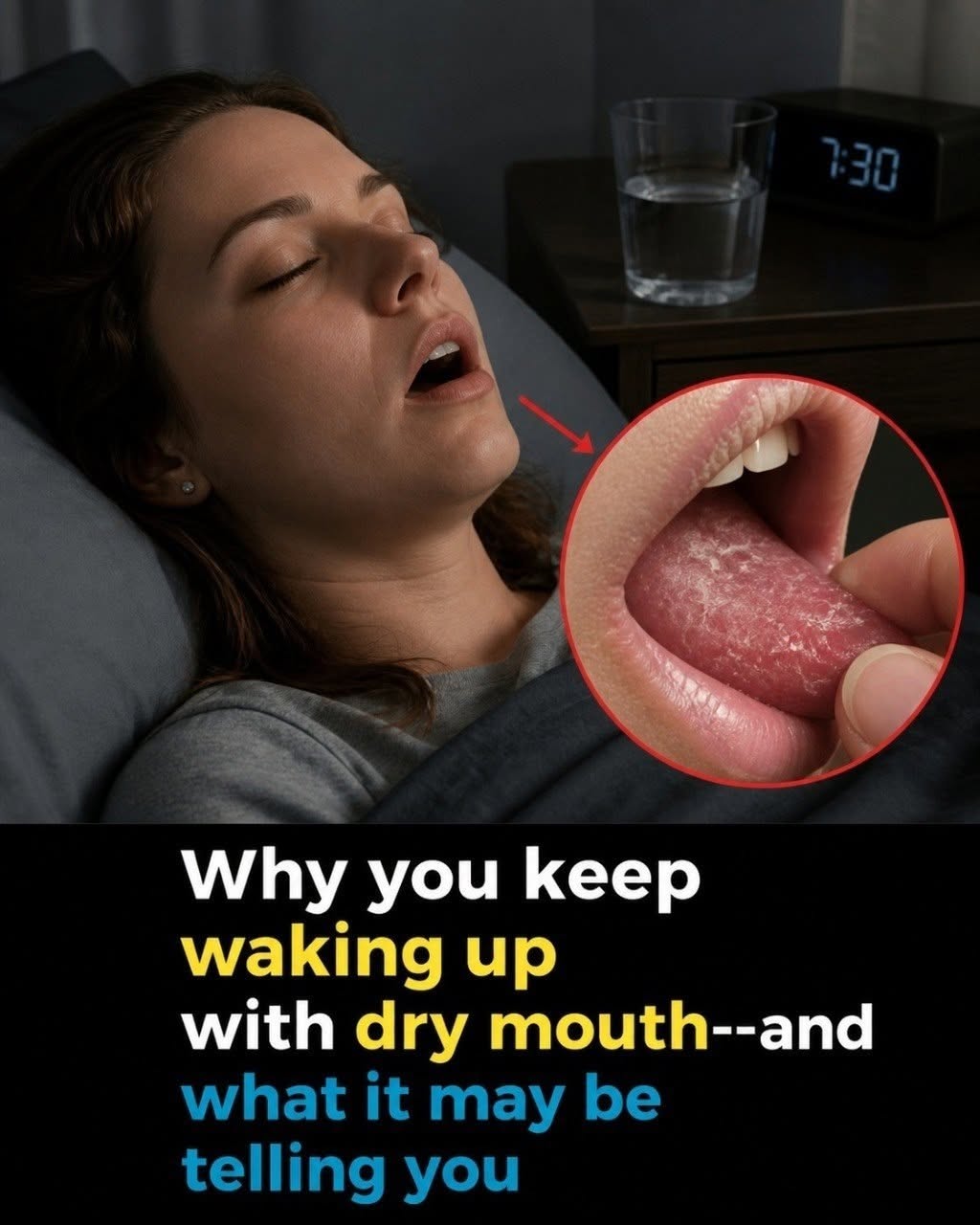
Waking Up With a Dry Mouth? Here’s What Your Body Might Be Telling You
A dry mouth in the morning is common and can happen for many reasons. It does not always indicate a serious problem, but it may be a clue that something is affecting your hydration, breathing, or saliva production.
1. You may be breathing through your mouth while sleeping
- A blocked nose, allergies, snoring, or sleeping with your mouth open can dry out the mouth overnight.
2. You may not be getting enough fluids
- Dehydration can reduce saliva production and make your mouth feel dry or sticky when you wake up.
3. Your bedroom air may be too dry
- Low humidity, especially with heating or air conditioning, can contribute to dryness.
4. Your medications may be affecting saliva
- Many medicines—including some for allergies, blood pressure, depression, and pain—can cause dry mouth as a side effect.
5. You may be snoring or have sleep-related breathing problems
- Conditions such as sleep apnea can involve mouth breathing and may be associated with dry mouth, loud snoring, or daytime tiredness.
6. Your caffeine, alcohol, or tobacco use may contribute
- These can affect hydration and saliva production in some people.
7. Your blood sugar may need checking
- Increased thirst and dry mouth can occur with high blood sugar, especially when combined with frequent urination, fatigue, or unexplained weight changes.
What may help:
- Drink enough water during the day.
- Address nasal congestion if it affects breathing.
- Use a humidifier if indoor air is very dry.
- Practice good oral hygiene, because reduced saliva can increase the risk of cavities.
Consider seeing a healthcare professional if:
- Dry mouth is persistent or worsening
- You have trouble swallowing, mouth sores, or frequent cavities
- You also have extreme thirst, frequent urination, or unexplained fatigue
- You suspect snoring or sleep apnea
Finding the cause is usually more helpful than simply treating the dryness.
