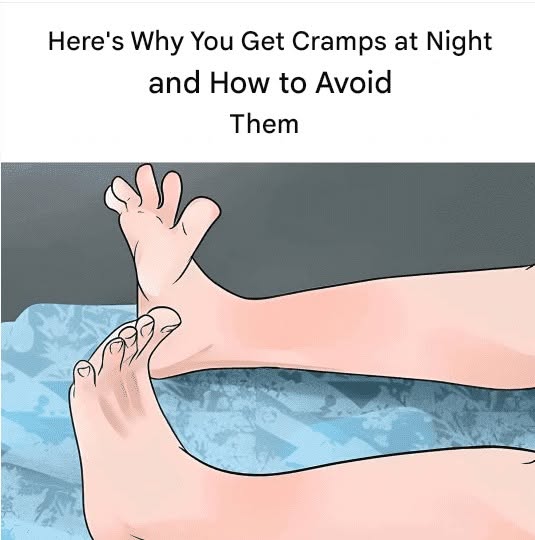
Why Do We Get Cramps at Night?
Nighttime cramps—often called nocturnal leg cramps—are sudden, painful muscle contractions that commonly affect the calves, feet, or thighs. They can happen to anyone, but they become more common with age.
Common reasons night cramps happen:
1. Muscle fatigue or overuse
- Long periods of standing, walking, exercising, or using muscles more than usual can trigger cramps later when you rest.
2. Dehydration
- Not drinking enough fluids may contribute to muscle discomfort, especially after sweating or physical activity.
3. Low levels of certain minerals
- Imbalances involving minerals such as magnesium, potassium, or calcium may play a role in some people, although cramps are not always caused by a deficiency.
4. Reduced blood flow or nerve issues
- Circulation problems, nerve compression, or conditions affecting nerves can sometimes contribute to muscle cramps.
5. Certain medications
Some medicines, including some diuretics and cholesterol-lowering medications, may be associated with muscle cramps in some people.
6. Changes that come with aging
- Muscles and tendons can become less flexible over time, making cramps more likely.
What may help prevent nighttime cramps:
✅ Stay hydrated throughout the day
✅ Stretch calf and leg muscles before bedtime
✅ Keep active with regular movement and strengthening exercises
✅ Wear comfortable, supportive footwear
✅ Avoid sudden increases in exercise intensity
During a cramp:
- Gently stretch the affected muscle.
- Massage the area.
- Stand up and put weight on the leg if you can do so safely.
- Apply warmth to help relax the muscle.
Talk to a healthcare professional if:
- Cramps are frequent, severe, or getting worse.
- They cause major sleep disruption.
- You have swelling, weakness, numbness, or changes in skin color.
- They started after beginning a new medication.
Occasional nighttime cramps are common, but repeated cramps can sometimes point to an underlying issue worth checking.
