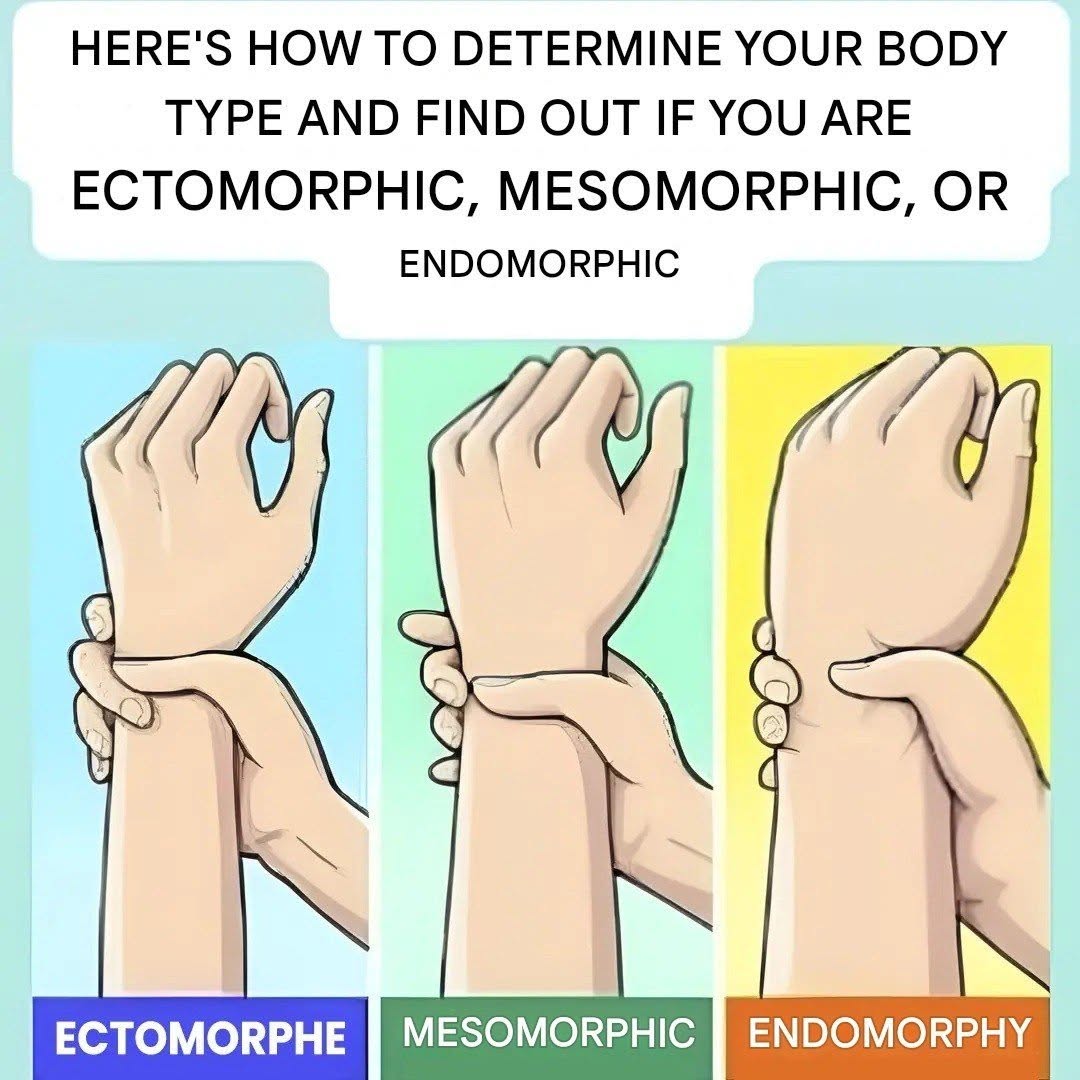
The idea of being an ectomorph, mesomorph, or endomorph comes from a system called somatotypes, developed in the 1940s. It’s still popular in fitness, but modern research shows that most people don’t fit neatly into one category, and body shape is influenced by genetics, diet, activity, hormones, and many other factors.
Here’s what the three classic body types describe:
🏃 Ectomorph
Typical characteristics:
- Naturally slimmer frame
- Smaller joints and narrower shoulders
- May find it harder to gain weight or muscle
Training and nutrition:
- Focus on progressive strength training
- Eat enough calories and protein to support muscle growth
- Include adequate rest between workouts
💪 Mesomorph
Typical characteristics:
- Naturally muscular or athletic build
- Gains muscle relatively easily
- May also gain fat if calorie intake is consistently high
Training and nutrition:
- Combine strength training with cardiovascular exercise
- Eat a balanced diet that matches activity level
🧍 Endomorph
Typical characteristics:
- Larger frame or broader build
- May gain weight more easily
- Can build muscle well, but may also store fat more readily
Training and nutrition:
- Prioritize regular strength training
- Include aerobic exercise
- Pay attention to overall calorie intake and food quality
The important caveat
Most people are a mix of these traits. For example, someone might have the upper-body characteristics of a mesomorph and the lower-body characteristics of an endomorph.
The best fitness and nutrition plan is usually based on:
- Your current body composition
- Your health status
- Your goals (muscle gain, fat loss, endurance, etc.)
- Your preferences and lifestyle
Bottom line
Somatotypes can be a useful descriptive framework, but they shouldn’t be treated as fixed categories or limits on what you can achieve. With consistent training, nutrition, and recovery, people of all body types can improve strength, fitness, and body composition.
If you’re curious, tell me your:
- Height
- Weight
- Age
- Sex
- Activity level
I can help you identify which somatotype you most closely resemble and suggest a training and nutrition approach tailored to you.
