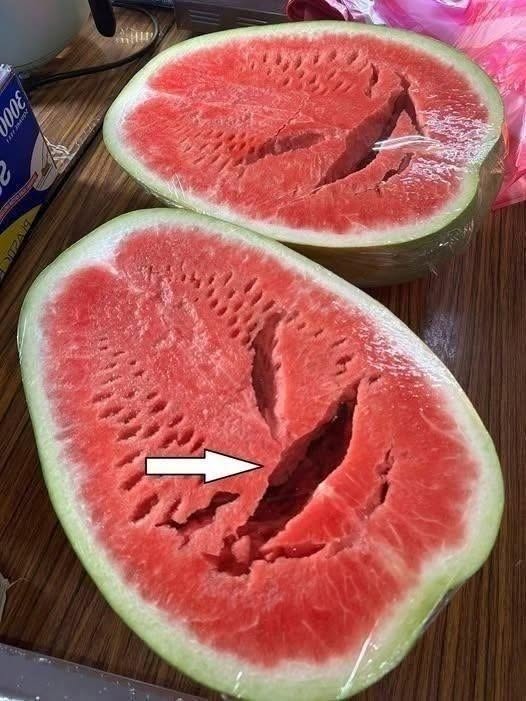
That’s another fear-style headline. Seeing “cracks” inside a watermelon is not automatically dangerous, and in many cases the fruit is still perfectly safe to eat.
What it means depends on the type of cracking:
🍉 1. Natural internal cracking (usually harmless)
Sometimes the inside of a watermelon develops splits because of:
- Rapid growth after heavy watering or rain
- Temperature swings during ripening
- Uneven development inside the fruit
👉 What it looks like:
- Web-like lines or splits in the flesh
- Irregular texture but normal color and smell
✔ Usually safe to eat if it smells fresh and tastes normal.
🍉 2. “Hollow heart” (common and harmless)
This is a known growth condition.
👉 Causes:
- Poor or uneven pollination
- Stress during fruit development
👉 Signs:
- Gaps or cracks in the center
- Sometimes a hollow or airy texture
✔ Not dangerous—just lower quality and less juicy in parts.
⚠️ 3. Spoilage or fermentation (when to avoid eating)
You should NOT eat it if cracks come with:
- Sour, alcoholic, or fermented smell
- Slimy or sticky texture
- Bubbling or foamy juice
- Dark, mushy, or leaking flesh
❌ These are signs of microbial spoilage.
🧠 4. Overripe or heat-damaged fruit
Cracks plus:
- Very soft flesh
- Watery or mushy texture
- Off or bland taste
👉 This usually means it’s past its best quality, not necessarily unsafe, but unpleasant.
🚫 Key reality check
- Internal cracks ≠ automatic contamination
- Most are growth issues, not “toxins”
- The “stop eating immediately” claim is exaggerated
🍉 Bottom line
If a cracked watermelon:
- Smells fresh
- Tastes normal
- Has no slime or bad odor
👉 It’s usually safe to eat.
If you want, I can also show you 5 simple tricks to pick a perfectly ripe watermelon before you buy it, so you avoid these surprises completely.
