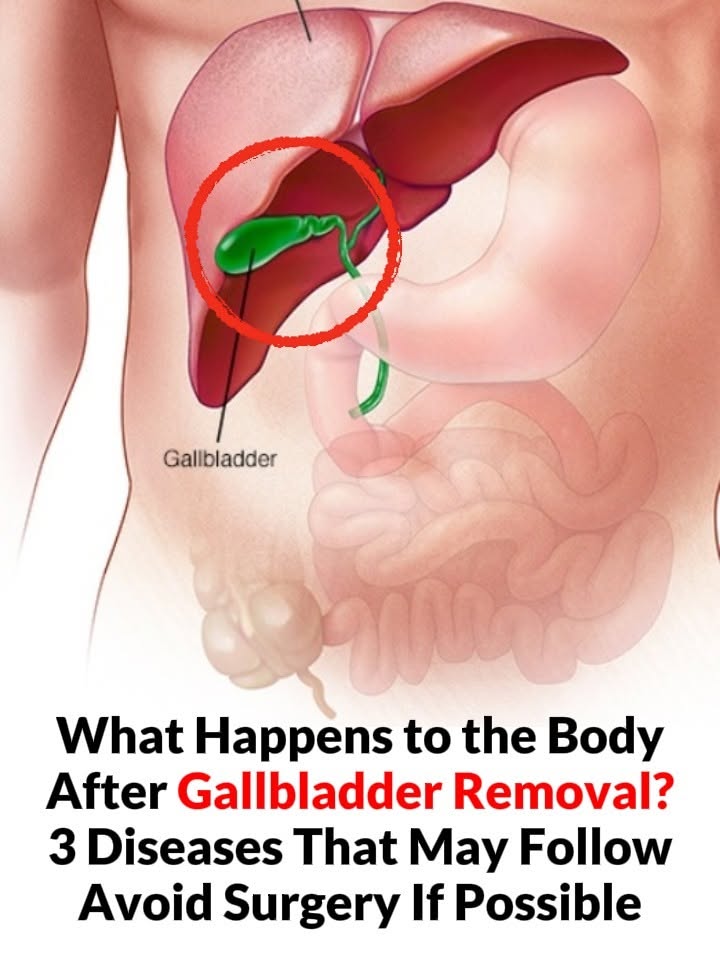
That headline is cut off and also a bit misleading in tone. After gallbladder removal, people don’t usually “develop 3 diseases.” What actually happens is a change in how bile flows through the digestive system, which can cause a few temporary or long-term digestive effects in some people.
The surgery is called a cholecystectomy, done for conditions like gallstones or inflammation.
🧠 What the gallbladder does (quickly)
Your gallbladder stores bile (made by the liver) and releases it when you eat fatty food to help digestion.
After removal:
👉 Bile flows continuously into the intestine instead of being stored and released on demand.
🍽️ What changes after surgery
1. Digestion becomes less “controlled”
- Fat digestion still works
- But it may be less efficient after large or fatty meals
- Some people feel bloating or discomfort
2. Stool changes (possible)
Some people experience:
- Loose stools or diarrhea
- More frequent bowel movements
This happens because bile is constantly entering the intestines.
3. Body adapts over time
Most people gradually adjust within weeks to months:
- Liver continues making bile normally
- Digestion stabilizes
- Symptoms often improve
⚠️ Possible issues (not “3 diseases,” but reported conditions)
🟡 1. Post-cholecystectomy diarrhea
- Usually mild and temporary
- Sometimes triggered by fatty foods
🟡 2. Bile reflux or indigestion symptoms
- Bloating
- Upper abdominal discomfort
🟡 3. Post-cholecystectomy syndrome
A broad term for persistent symptoms like:
- Gas
- Pain
- Irregular digestion
Often linked to other digestive issues, not just gallbladder removal.
🚨 What people usually worry about (but shouldn’t)
Many fear:
- “You can’t digest fat anymore” ❌
- “You’ll get new diseases” ❌
- “Your liver will fail” ❌
These are not true for most people.
🧠 Key takeaway
Gallbladder removal doesn’t cause diseases—it causes a change in bile flow, and the body usually adapts well.
Most people:
✔ Eat normally again
✔ Live completely healthy lives
✔ Only need mild dietary adjustments
❤️ Bottom line
- Surgery removes a storage organ, not a vital digestive system
- Side effects are usually temporary and manageable
- Serious long-term problems are uncommon
If you want, I can explain what foods to avoid and what to eat after gallbladder removal to prevent diarrhea and bloating—that’s usually the most practical concern people have.
