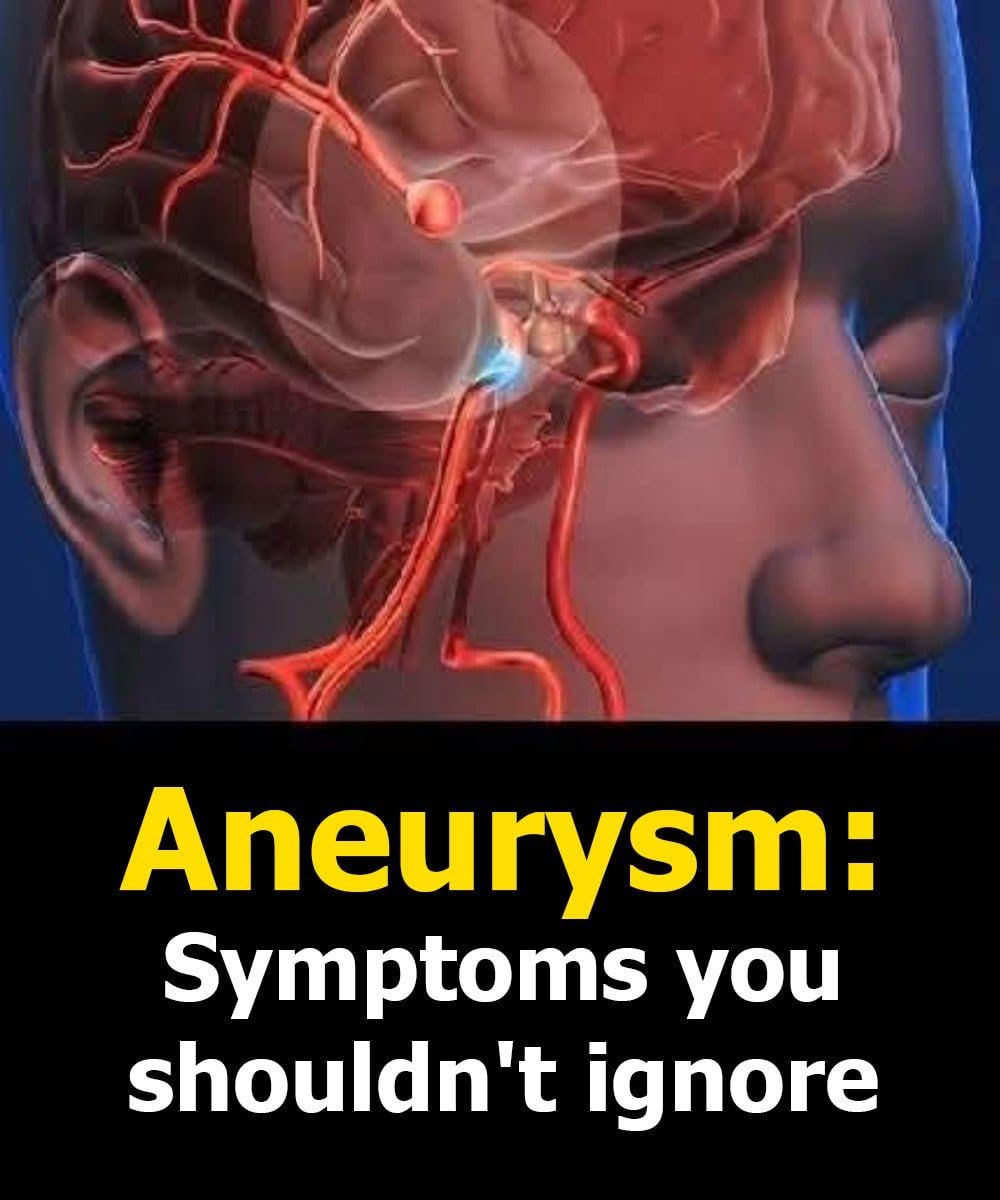
An aneurysm is a bulging or weakened area in a blood vessel wall that can expand and, in some cases, rupture. Not all aneurysms cause symptoms—but when they do, the warning signs can be serious.
There are different types (brain, aorta, etc.), but here are the key symptoms you should never ignore.
🧠 Brain aneurysm warning signs (before or during rupture)
A brain aneurysm (often called a “cerebral aneurysm”) may cause:
⚠️ 1. Sudden, severe headache
Often described as:
- “Worst headache of my life”
- Thunderclap onset (comes instantly)
👁️ 2. Vision problems
- Double vision
- Blurred vision
- Drooping eyelid
🧍 3. Pain above or behind the eye
Especially one-sided and persistent.
😵 4. Nausea or vomiting
Often occurs with severe headache or pressure changes.
🧠 5. Confusion or difficulty speaking
Can indicate brain pressure or bleeding.
⚖️ 6. Loss of balance or weakness
- Dizziness
- Trouble walking
- Numbness on one side of the body
🚨 Signs of a ruptured brain aneurysm (emergency)
If it bursts, symptoms are sudden and life-threatening:
- Sudden extreme headache
- Loss of consciousness
- Seizures
- Neck stiffness
- Sudden collapse
👉 This is a medical emergency—call emergency services immediately.
❤️ Aortic aneurysm warning signs (in chest or abdomen)
Aneurysms in the main artery of the body (aorta) may cause:
1. Deep, constant chest or back pain
- Sudden or severe
- May feel tearing or ripping
2. Pulsing feeling in abdomen
- Noticeable heartbeat-like sensation near the stomach
3. Shortness of breath
- Especially if chest aneurysm is large
4. Low blood pressure, fainting, or shock (rupture)
- Sudden collapse
- Cold, clammy skin
- Rapid heartbeat
⚠️ Who is at higher risk?
Risk increases with:
- High blood pressure
- Smoking
- Age over 50–60
- Family history
- Conditions affecting blood vessels
🧠 Key takeaway
Most aneurysms are silent until they grow or rupture. The most important red flag is:
👉 sudden, severe, unusual pain—especially headache or chest/back pain
🚨 Bottom line
If someone experiences:
- Sudden “worst headache ever”
- Collapse or fainting
- Severe chest or back pain
👉 Treat it as an emergency immediately.
If you want, I can explain early risk factors for aneurysms and how they’re detected before they become dangerous, which is often more useful than symptom lists.
