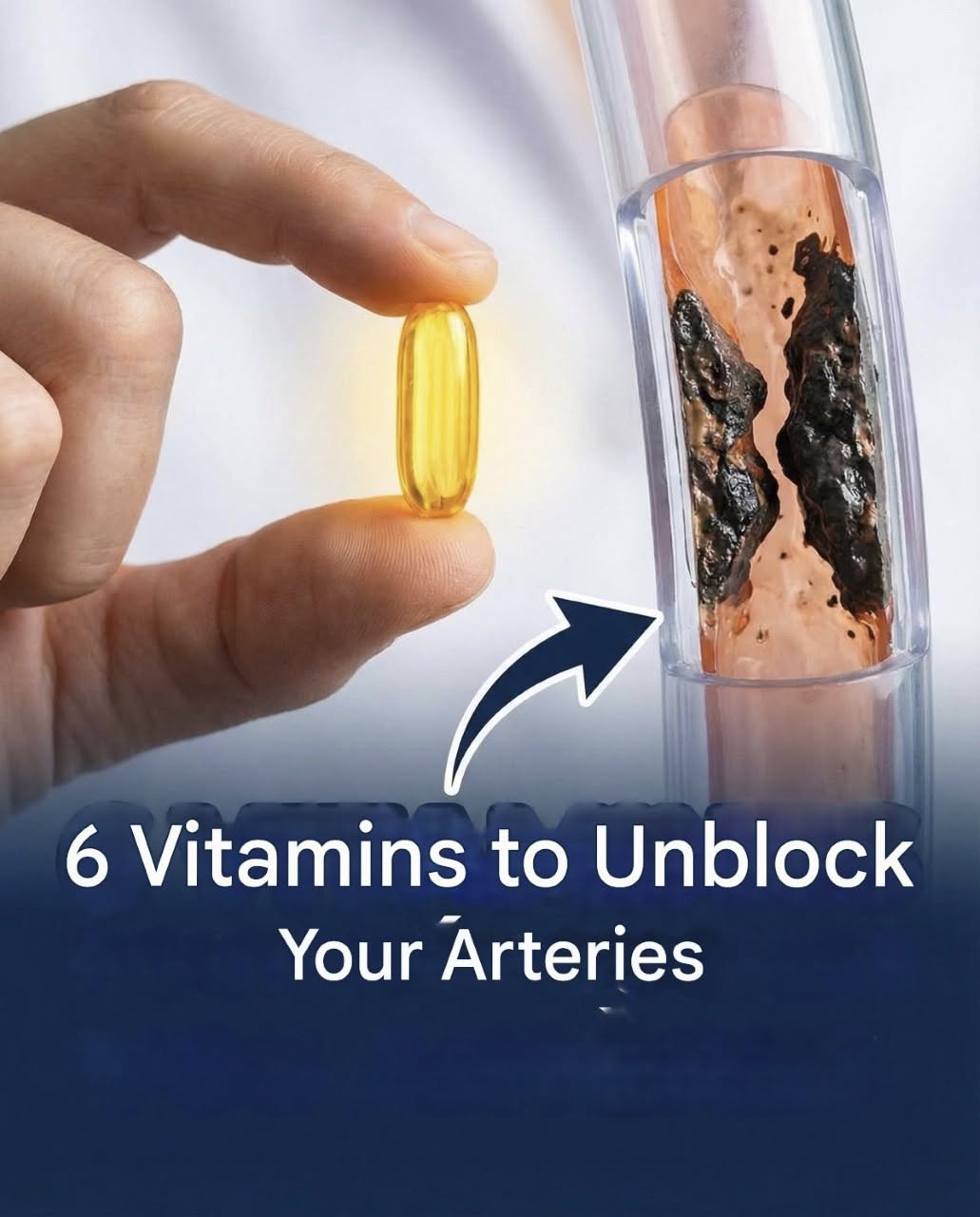
“6 Vitamins to Unblock Your Arteries” — What You Should Know
Claims that vitamins can “unblock arteries” are misleading. No vitamin can dissolve plaque buildup or clear blocked arteries. Artery narrowing from cholesterol plaque (atherosclerosis) usually develops over many years and requires evidence-based approaches such as lifestyle changes, medications when needed, and medical procedures in certain cases.
However, some vitamins and nutrients are important for supporting overall heart and blood vessel health:
1. Vitamin B12
- Helps maintain healthy blood cells and nerves.
- A deficiency can contribute to elevated homocysteine levels, which are associated with cardiovascular risk.
2. Folate (Vitamin B9)
- Works with vitamin B12 in normal blood formation and homocysteine metabolism.
- Found in leafy greens, beans, and fortified foods.
3. Vitamin C
- Supports collagen production, which helps maintain the structure of blood vessels.
- Found in citrus fruits, berries, peppers, and vegetables.
4. Vitamin D
- Important for many body functions.
- Low vitamin D levels are associated with cardiovascular risk factors, although taking supplements does not automatically prevent heart disease.
5. Vitamin E
- Acts as an antioxidant, but high-dose supplements have not been shown to prevent heart attacks and may be harmful for some people.
6. Vitamin K (especially K1 and K2)
- Plays a role in normal blood clotting and bone health.
- Its relationship with artery calcification is still being studied.
What actually helps support healthier arteries:
✅ Eat more vegetables, fruits, whole grains, legumes, and healthy fats
✅ Exercise regularly (such as walking and strength training)
✅ Avoid smoking
✅ Control blood pressure, cholesterol, and blood sugar
✅ Take prescribed medications if recommended by your healthcare professional
Seek medical advice if you have signs of circulation problems:
- Chest pain or pressure
- Shortness of breath with activity
- Leg pain when walking that improves with rest
- Sudden weakness, numbness, or trouble speaking
Vitamins can help correct deficiencies, but they are not a replacement for proven treatments that reduce cardiovascular risk and manage artery disease.
