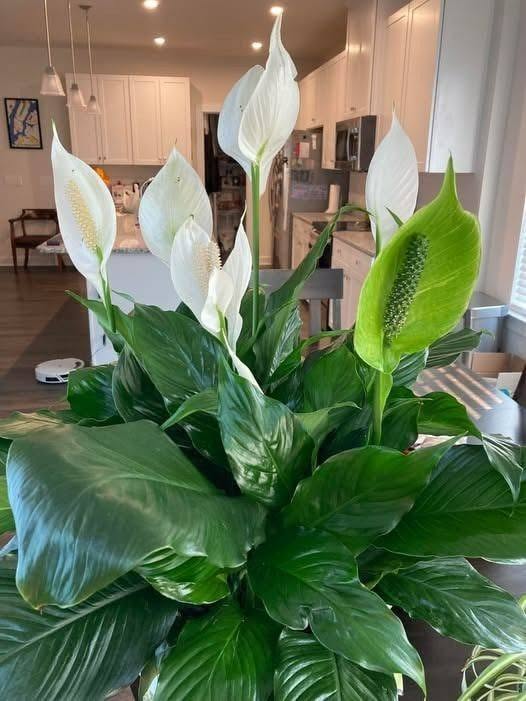
How to Get Your Peace Lily to Bloom More
A peace lily can flower repeatedly for many years with the right care. There isn’t a single “secret ingredient” that guarantees blooms, but providing the right growing conditions gives the best chance of healthy flowers.
1. Give it bright, indirect light
- Peace lilies grow in low light but usually flower better in bright, indirect light.
- Avoid prolonged direct sunlight, which can scorch the leaves.
2. Water properly
- Water when the top 2–3 cm (about 1 inch) of soil feels dry.
- Keep the soil evenly moist but not waterlogged.
- Empty any excess water from the saucer to help prevent root rot.
3. Feed during the growing season
- Use a balanced liquid houseplant fertilizer at half strength every 6–8 weeks during spring and summer.
- Too much fertilizer can reduce flowering or damage the plant.
4. Maintain moderate humidity
- Peace lilies prefer moderate to high humidity.
- If your home is very dry, occasional misting or placing the pot on a pebble tray with water (without the pot sitting directly in the water) may help.
5. Keep temperatures comfortable
- Ideal temperatures are about 18–27°C (65–80°F).
- Protect the plant from cold drafts and sudden temperature changes.
6. Repot only when necessary
- Peace lilies often bloom well when they are slightly root-bound.
- Repot if the roots are crowded or growing out of the drainage holes.
7. Remove spent flowers
- Cut off faded flower stalks near the base so the plant can direct energy toward new growth.
8. Keep the leaves clean
- Wipe dust from the leaves with a damp cloth so they can absorb light more effectively.
Common reasons a peace lily doesn’t bloom
- Too little light
- Overwatering or underwatering
- Excess fertilizer
- Very low humidity
- The plant is still young or recovering from stress
With consistent care, a healthy peace lily can produce blooms year after year. Patience is important—flowering often depends more on light and overall plant health than on any single fertilizer or home remedy.
