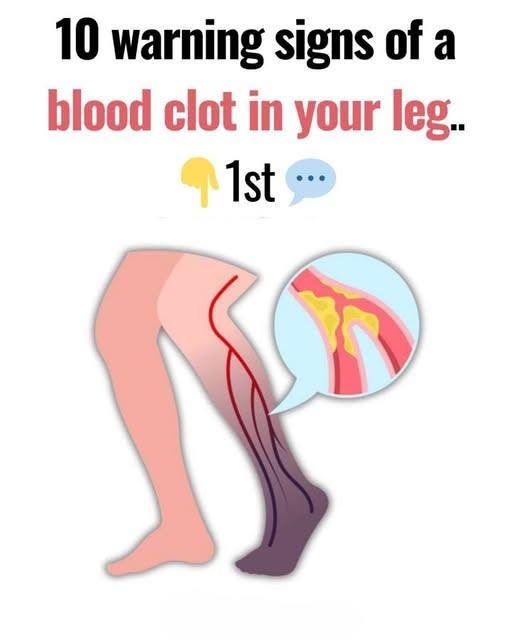
10 Warning Signs of a Blood Clot in the Leg (Deep Vein Thrombosis)
A blood clot that forms in a deep vein of the leg is called deep vein thrombosis (DVT). It can be serious because a clot may break loose and travel to the lungs, causing a pulmonary embolism, which requires urgent medical attention.
1. Swelling in one leg
- One leg may become noticeably larger than the other.
- Swelling can occur in the calf, ankle, or entire leg.
2. Leg pain or tenderness
- Pain may feel like a cramp, soreness, or aching—often in the calf or thigh.
- It may worsen when walking or standing.
3. Warmth in the affected area
- The skin over the clot may feel warmer than the surrounding area.
4. Redness or discoloration
- The skin may appear red, darker, or have a bluish tint.
5. A feeling of heaviness or tightness
- The leg may feel unusually heavy, tight, or full.
6. Enlarged or more visible veins
- Surface veins may become more noticeable in some cases.
7. Unexplained leg discomfort
- Persistent discomfort that does not improve with rest may need evaluation.
8. Sudden changes in one leg
- Symptoms affecting only one side are more concerning than equal symptoms in both legs.
9. Shortness of breath (possible clot traveling to the lungs)
- Sudden difficulty breathing can be a sign of a pulmonary embolism.
10. Chest pain or coughing blood (emergency signs)
- Chest pain, especially when breathing deeply, or coughing up blood requires immediate emergency care.
Seek urgent medical help if you suspect a blood clot
Do not massage a swollen, painful leg if a clot is possible. A healthcare professional can evaluate symptoms and use tests such as an ultrasound to confirm or rule out DVT.
Risk factors that increase the chance of DVT include:
- Long periods of sitting or immobility
- Recent surgery or hospitalization
- Previous blood clots
- Smoking
- Certain cancers
- Some hormone therapies
- Older age
- Certain inherited clotting conditions
Important: Leg swelling or pain can have many causes, but a new, unexplained swelling or pain in one leg should be checked—especially if it appears suddenly or is accompanied by breathing problems or chest pain.
