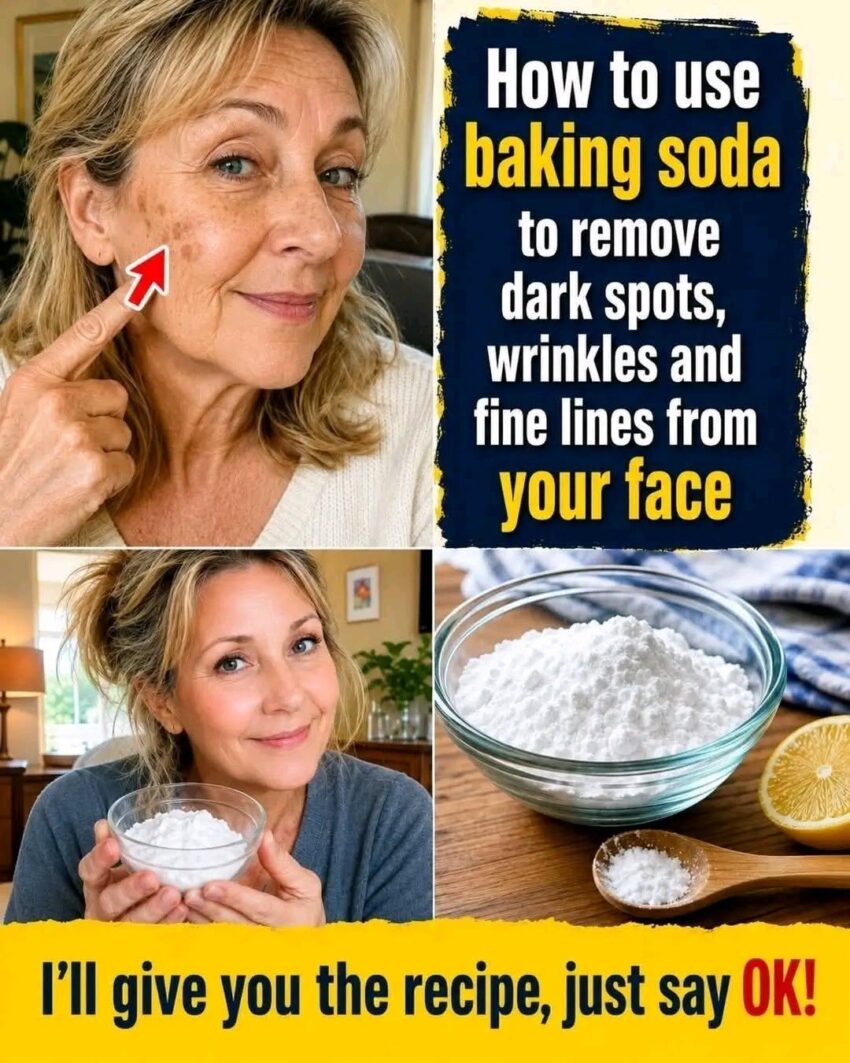
Baking Soda for Dark Spots, Wrinkles, and Dark Circles: What You Should Know
Baking soda is a common household ingredient, and some people use it in DIY skincare. However, claims that it can erase wrinkles, remove dark spots, or eliminate dark circles are not supported by strong scientific evidence. Baking soda may temporarily make skin feel smoother, but it can also irritate or damage the skin barrier if used incorrectly.
Why people use baking soda on skin
Baking soda (sodium bicarbonate) is mildly abrasive and alkaline, so it may:
- Remove some surface buildup when used carefully
- Temporarily reduce the feeling of roughness
However, it does not:
- Reverse aging
- Remove deep wrinkles
- Permanently lighten dark spots
- Cure dark circles
Risks of using baking soda on your face
The skin naturally has a slightly acidic protective barrier. Baking soda is alkaline and may cause:
- Dryness
- Irritation
- Burning or redness
- Increased sensitivity
- Worsening of dark marks after irritation (especially in darker skin tones)
Safer approaches for common concerns
For dark spots:
- Daily sunscreen is one of the most important steps.
- Ingredients with evidence for improving uneven skin tone include:
- Vitamin C
- Niacinamide
- Retinoids
- Azelaic acid
For wrinkles:
- Sunscreen every day
- Moisturizers that support the skin barrier
- Retinoids (when appropriate)
- Professional treatments if desired
For dark circles:
- Improve sleep quality and manage allergies if relevant.
- Some dark circles are caused by genetics, thin skin, or shadows and may not fully respond to creams.
If you still want to try baking soda
- Avoid using it as a harsh scrub.
- Do a patch test first.
- Stop if you notice burning, redness, or peeling.
- Avoid applying it near the eyes.
Bottom line: Baking soda is better suited for household uses than as a facial treatment. For dark spots, wrinkles, and dark circles, proven skincare ingredients and consistent sun protection are safer and more effective options.
