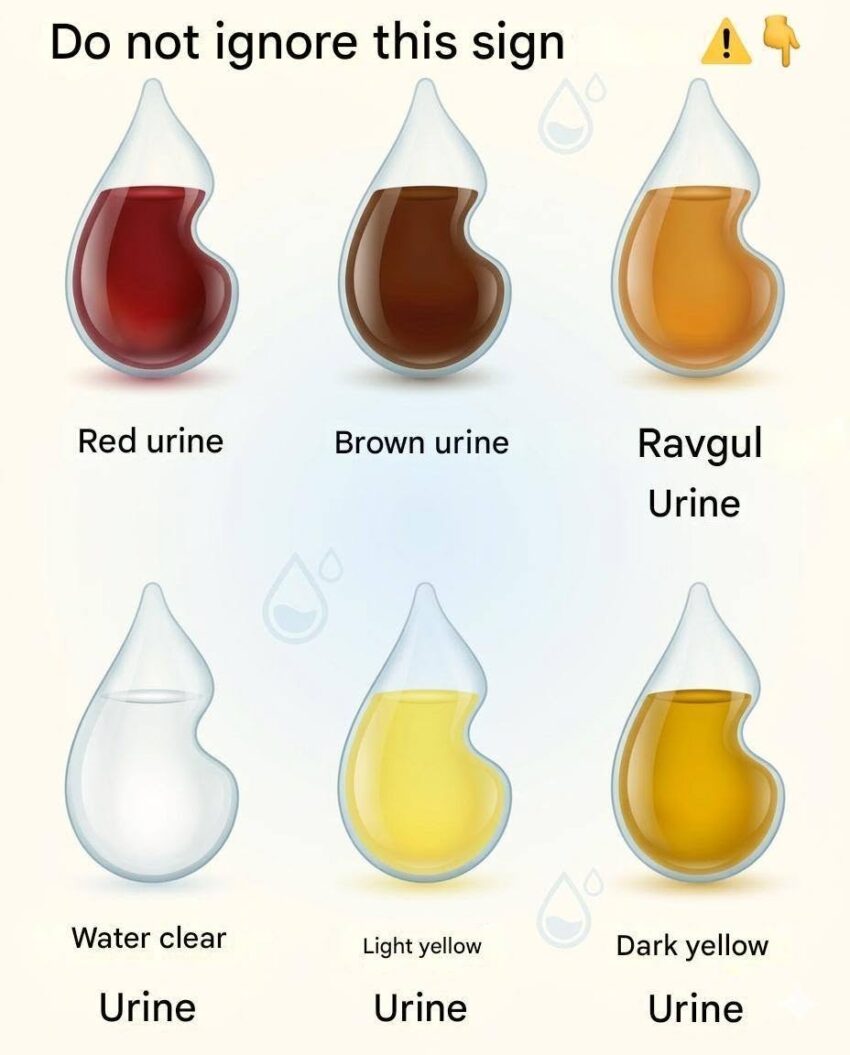
What Does the Color of Your Urine Say About Your Health?
Urine color can offer clues about hydration and some health conditions, but it is not a diagnosis by itself. Diet, vitamins, medications, and fluid intake can all change the color of urine.
🟡 Pale yellow — Often normal
- Usually suggests good hydration.
- A light straw color is commonly considered a healthy range.
🟨 Dark yellow or amber — Possible dehydration
- More concentrated urine often means your body may need more fluids.
- Increasing water intake may help if dehydration is the cause.
⚪ Clear urine — May mean high fluid intake
- Very clear urine can happen when you drink a lot of water.
- If it is constant and accompanied by excessive thirst or frequent urination, discuss it with a healthcare professional.
🟠 Orange urine
Possible causes include:
- Dehydration
- Certain medications
- Some vitamins or food coloring
Persistent orange urine, especially with other symptoms, should be checked.
🔴 Pink or red urine
Possible causes include:
- Blood in the urine
- Certain foods (such as beets)
- Some medications
Unexplained blood in urine should be evaluated by a healthcare professional.
🟤 Brown or tea-colored urine
Possible causes include:
- Severe dehydration
- Certain medications
- Liver-related problems
- Muscle breakdown in rare cases
Seek medical advice if it persists or occurs with weakness, pain, or yellowing of the skin or eyes.
🟢 Green or blue urine
Possible causes include:
- Certain medications
- Food dyes
- Rare medical causes
☁️ Cloudy urine
May be associated with:
- Dehydration
- Urinary tract infection (UTI)
- Kidney stones
- Other causes
🚨 Seek medical attention if you have:
- Blood in your urine
- Pain or burning when urinating
- Fever or chills
- Severe back or side pain
- A sudden major change in urine amount or appearance
Bottom line: Healthy urine is often pale yellow, but color changes are common. Look at the whole picture—your symptoms, medications, diet, and overall health—rather than relying on color alone.
