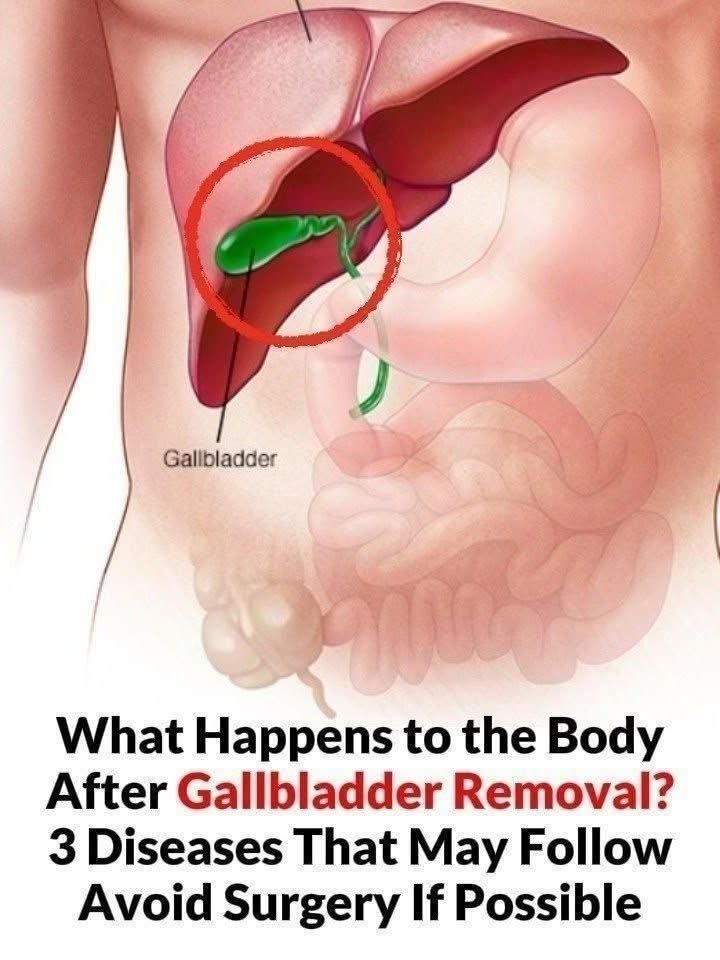
The title “After Gallbladder Removal: 3 Conditions You Could Develop — Why You Should Avoid the Surgery When Possible” is misleading.
Surgery to remove the gallbladder—called Cholecystectomy—is not something to “avoid when possible” in a general sense. When it’s recommended (usually for symptomatic gallstones), it is because the risks of not treating the condition can be higher than the risks of surgery.
For example, untreated Gallstones can lead to:
- Severe pain attacks
- Gallbladder infection
- Blockage of bile ducts
- Pancreatitis (potentially serious)
So what can happen after gallbladder removal?
Most people live normally after surgery, but a minority may experience these issues:
1. Post-cholecystectomy diarrhea
Without a gallbladder, bile flows continuously into the intestines.
- This can irritate the bowel in some people
- Leads to loose stools, especially after fatty meals
Usually treatable with diet changes or medication.
2. Bile reflux or gastritis
In some cases, bile can flow backward into the stomach:
- Causes burning sensation or indigestion
- May feel like acid reflux but is bile-related
This is less common but manageable.
3. Bile acid malabsorption
Some people absorb bile acids poorly after surgery:
- Causes chronic diarrhea or urgency
- Often improves with bile-binding medications
4. Sphincter of Oddi dysfunction (rare)
A rare condition where the bile duct valve doesn’t relax properly:
- Can cause pain similar to gallbladder attacks
- Not common and sometimes unrelated to surgery itself
Important reality check
Most patients:
- Do not develop serious long-term complications
- Experience major relief from gallstone pain after surgery
- Return to normal digestion within weeks to months
Long-term quality of life after Cholecystectomy is generally very good.
Bottom line
The idea that you should “avoid gallbladder removal when possible” is not accurate as a blanket rule. The decision depends on your specific condition, especially how severe your Gallstones are and whether they are causing complications.
If you want, tell me your symptoms or what your doctor suggested—I can help you understand whether surgery is typically recommended in that situation or if there are reasonable alternatives.
