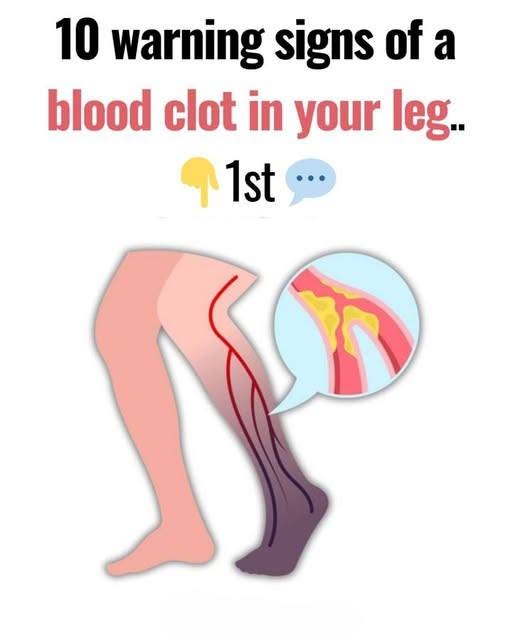
A blood clot in the leg—called a Deep vein thrombosis (DVT)—can be serious because it may travel to the lungs and become life-threatening. The key is recognizing early warning signs.
Here are 10 important signs to watch for:
🦵 1. Swelling in one leg
Most common sign. The affected leg may look noticeably larger than the other.
🔴 2. Pain or tenderness
Often feels like:
- Cramping
- Soreness
- Deep ache in the calf or thigh
🔥 3. Warm skin over the area
The skin may feel warmer compared to the other leg.
🎨 4. Red or discolored skin
The affected area may appear reddish or bluish.
⚖️ 5. Heaviness in the leg
A feeling that the leg is “heavy” or hard to move normally.
🚶 6. Pain that worsens when walking or standing
Movement can increase discomfort.
🧦 7. Swelling that doesn’t go down
Unlike normal swelling, it persists or worsens over time.
🩸 8. Visible surface veins
Veins may appear more prominent due to blocked deeper circulation.
🌡️ 9. Unexplained tenderness in the calf
Pain when pressing the calf muscle or flexing the foot.
⚠️ 10. Sudden shortness of breath (emergency sign)
This may mean the clot has moved to the lungs, causing a pulmonary embolism. This is a medical emergency.
🧠 Important reality check
Not all leg pain or swelling is a clot. It can also be caused by:
- Muscle strain
- Infection
- Varicose veins
- Injury
But DVT is dangerous because it can be silent at first.
🚨 When to seek urgent care
Get medical help immediately if you have:
- One-sided leg swelling + pain
- Skin warmth and redness
- Any breathing difficulty or chest pain
🧾 Bottom line
A blood clot in the leg often shows one-sided swelling, pain, warmth, and discoloration, and should never be ignored if symptoms appear suddenly.
If you want, I can also explain what causes DVT and how to prevent it during long sitting, travel, or bed rest.
