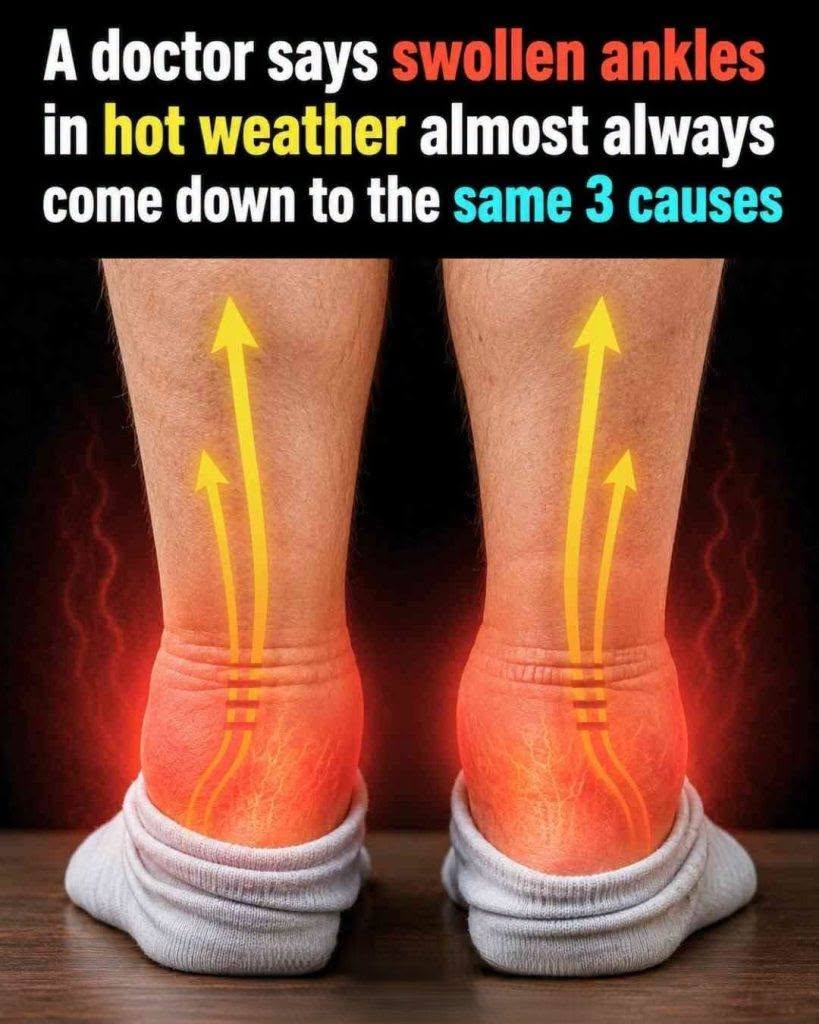
Swollen ankles in hot weather are often caused by fluid collecting in the lower legs (ankle edema). While there are many possible causes, three common ones are:
1. Heat-related fluid retention
When temperatures rise, blood vessels widen (dilate) to help cool the body. This can make it easier for fluid to move into surrounding tissues, especially in the feet and ankles. It is more noticeable after:
- Standing or sitting for long periods
- Traveling
- Being less active in hot weather
2. Poor circulation or vein problems
The veins in your legs have to work against gravity to return blood to the heart. If the valves in the veins become weaker, blood can pool in the lower legs, causing:
- Swollen ankles (often worse by evening)
- Heavy or aching legs
- Visible varicose veins
3. Too much salt or underlying health issues
A high-salt diet can make the body hold onto water. Persistent ankle swelling can also be related to conditions involving the:
- Heart
- Kidneys
- Liver
- Thyroid
- Certain medications (such as some blood pressure medicines)
Things that may help mild heat-related swelling:
- Elevate your legs when resting
- Walk around regularly if sitting for long periods
- Stay hydrated
- Reduce excess salt
- Avoid tight socks or footwear
- Gentle ankle movements can improve circulation
Get medical advice sooner if swelling:
- Appears suddenly or is only on one leg
- Comes with chest pain, shortness of breath, or fainting
- Is painful, red, or warm
- Is persistent or getting worse
If you mean swollen ankles that happen only during hot weather, the first cause (heat-related fluid retention) is often the explanation—but the pattern and other symptoms matter.
