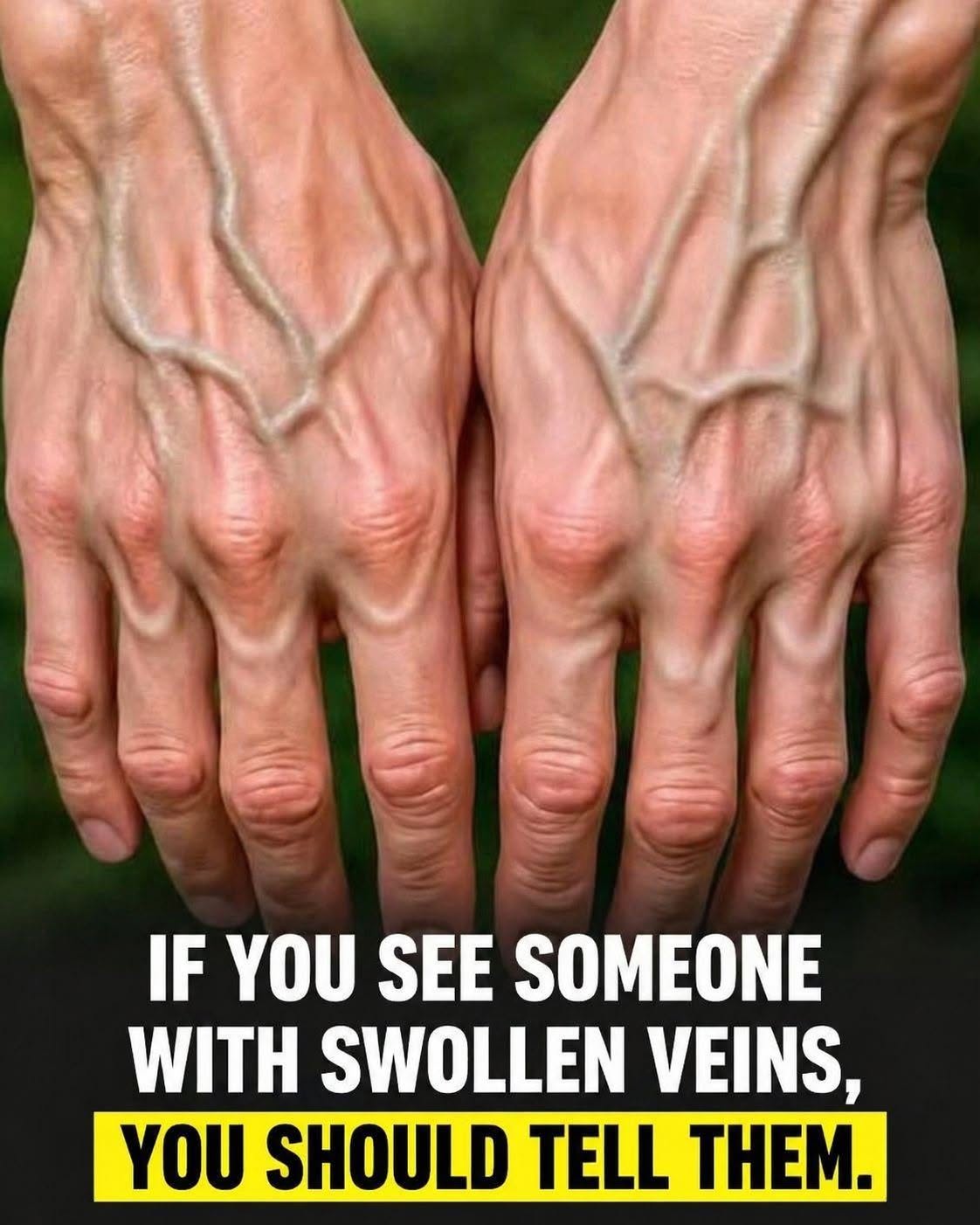
The headline “If your veins are visible, it means you are…” is misleading. Visible veins are often completely normal and do not, by themselves, indicate a disease or a specific health condition.
Common reasons veins are more visible include:
- Fair or thin skin: Veins are easier to see through lighter or thinner skin.
- Low body fat: With less fat under the skin, veins become more noticeable.
- Exercise: After physical activity, veins may temporarily appear larger because of increased blood flow.
- Aging: As skin becomes thinner with age, veins can become more visible.
- Warm weather: Heat causes blood vessels near the skin to widen, making veins stand out more.
- Genetics: Some people naturally have more prominent veins.
When visible veins may need medical attention
See a healthcare professional if visible veins are accompanied by:
- Pain, swelling, or tenderness
- Redness or warmth
- Sudden enlargement of a vein
- Skin discoloration or ulcers
- A hard, cord-like vein
These symptoms could indicate conditions such as Varicose veins, Superficial thrombophlebitis, or, less commonly, other circulation problems.
In most cases, visible veins alone are simply a normal variation in appearance and are not a sign of poor health. If you’re concerned because your veins have changed suddenly or are causing symptoms, it’s worth getting them evaluated.
