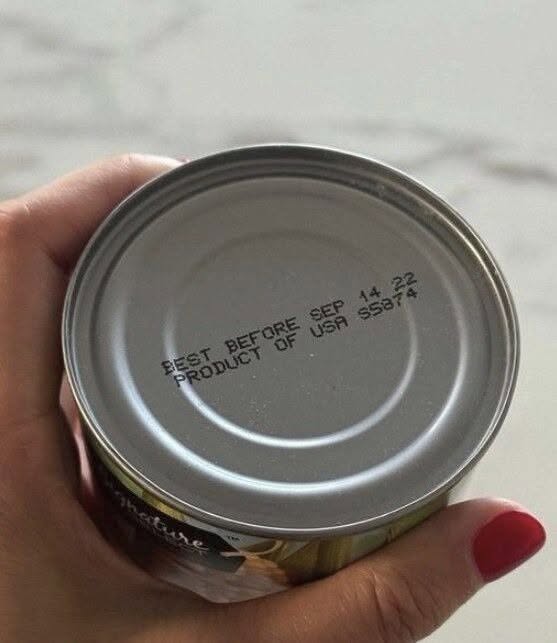
The claim “Most people get this wrong and toss out the can. The right way to read ‘Best By’ or ‘Best Before’ dates.” is mostly true in that many people misunderstand date labels. In many countries, these dates indicate quality, not food safety.
Here’s what the common labels usually mean:
- “Best By” or “Best Before”: The manufacturer expects the product to have its best flavor, texture, or quality before this date. It is often still safe to eat afterward if it has been stored properly and the packaging is intact.
- “Use By”: This is the last recommended date for peak safety or quality on certain foods, especially highly perishable items. It should be taken more seriously than a “Best By” date.
- “Sell By”: This is primarily for retailers to help manage inventory. Consumers can often use the product for some time after this date if it has been stored correctly.
What about canned foods?
Commercially canned foods can often remain safe well beyond the “Best By” date if:
- The can is unopened.
- The can is not bulging, leaking, rusted through, or deeply dented.
- It has been stored in a cool, dry place.
However, quality (taste, color, and texture) may gradually decline over time.
Never eat canned food if:
- The can is bulging or swollen.
- There is a leak.
- The can is severely damaged or rusted through.
- It spurts liquid or has a foul odor when opened.
These can be signs of spoilage or, in rare cases, contamination with bacteria such as Clostridium botulinum, which can cause botulism, a serious illness.
Bottom line
Many people do throw away perfectly good food because they misunderstand “Best By” or “Best Before” dates. These labels usually refer to quality, not safety. However, you should always inspect the food and packaging and follow storage instructions. When in doubt—especially if a canned food shows signs of damage or spoilage—it’s safest to discard it.
