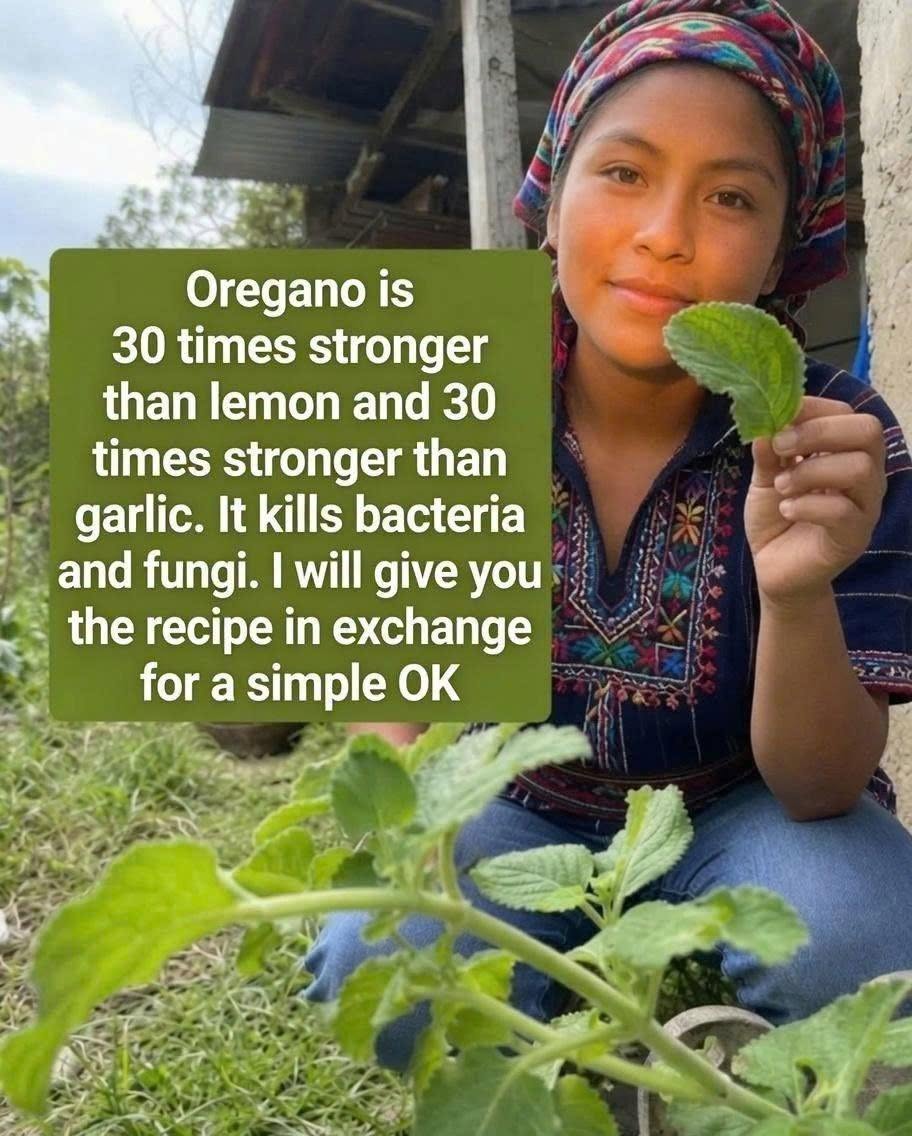
Claims like “oregano is 30 times stronger than lemon and 30 times stronger than garlic; it kills bacteria and fungi” are based on a mix of real research and exaggeration.
Oregano does contain compounds—especially carvacrol and thymol—that have shown antimicrobial activity in laboratory studies. Oregano essential oil, in particular, has been studied for effects against certain bacteria and fungi in test tubes.
However:
- There is not good evidence that eating oregano or taking oregano products can act like an antibiotic or antifungal medicine inside the human body.
- “30 times stronger” comparisons depend on how strength is measured and are not a reliable way to judge health effects.
- Oregano should not be used to replace prescribed treatments for infections.
Ways oregano can be beneficial
- Adds flavor to food, helping support a varied diet.
- Contains plant compounds with antioxidant properties.
- May contribute small amounts of nutrients when consumed as part of meals.
Be careful with oregano oil
Concentrated oregano essential oil can:
- Irritate the mouth, throat, or stomach
- Interact with some medications
- Be unsafe in certain situations (such as pregnancy or for some health conditions)
Oregano is a useful culinary herb, but claims that it “kills all bacteria and fungi” or works like a medicine are not supported by strong human evidence.
